






What's Happening?
U.S. retail sales on Black Friday increased by 5.8% compared to the previous year, according to preliminary data from Mastercard SpendingPulse. This rise occurred despite ongoing affordability concerns among consumers. The data, which excludes gas and
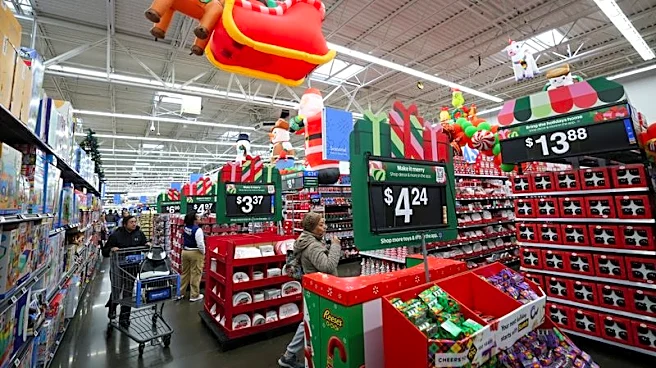
auto sales and includes all payment types, indicates continued consumer spending during one of the year's busiest shopping days. Online sales saw a significant boost, climbing 13.4% year-over-year, while in-store spending grew by 3.8%. This marks the strongest in-store Black Friday performance since 2022. Electronics and software led the spending categories with a 7.9% increase, building on earlier November surges driven by video game launches. Apparel spending also rose by 4.4% on Black Friday and 7.4% on Thanksgiving, with jewelry sales increasing by 4.6%. Mastercard's chief economist, Michelle Meyer, noted that the figures suggest an adaptable consumer who is willing to spend but remains thoughtful about their purchasing decisions.
Why It's Important?
The increase in Black Friday sales signals a resilient consumer base willing to engage in holiday shopping, which is crucial for the retail sector and the broader U.S. economy. The growth in online sales highlights the continued shift towards e-commerce, influencing retailers to invest further in their digital platforms and omnichannel strategies. The strong performance in electronics and software suggests consumer demand for technology and entertainment remains robust, potentially benefiting tech companies and gaming industries. While the data shows increased spending, it does not account for inflation, meaning some of the reported growth could be due to higher prices rather than increased purchase volume. This makes it challenging to fully assess consumer purchasing power and the true health of the retail market. The report also underscores the importance of strategic shopping, with experts advising consumers to budget and compare prices to ensure real savings amidst ongoing affordability pressures.
What's Next?
Following Black Friday, Mastercard anticipates a moderation in spending before a resurgence closer to shipping deadlines and in the final week leading up to Christmas, as consumers make last-minute purchases. Retailers will likely continue to offer promotions and discounts to capture remaining holiday spending, particularly as shipping cut-off dates approach. The focus will shift towards Cyber Monday and subsequent holiday sales events, with businesses analyzing Black Friday trends to refine their strategies for the rest of the holiday season. Consumers are expected to remain price-sensitive, continuing to seek out deals and compare prices across different retailers. The overall performance of the holiday shopping season will be closely watched as an indicator of consumer confidence and economic stability heading into the new year, with potential implications for inventory management and future retail strategies.
Beyond the Headlines
The sustained spending on Black Friday, despite affordability concerns, points to a complex consumer psychology where the desire for deals and holiday traditions may temporarily outweigh economic anxieties. This could indicate that consumers are strategically allocating their budgets to take advantage of perceived savings on big-ticket items, rather than a complete disregard for financial pressures. The significant growth in online sales further solidifies the digital transformation of retail, potentially leading to long-term shifts in brick-and-mortar store footprints and operational models. The emphasis on electronics and software also reflects evolving consumer priorities, where technology and digital entertainment play an increasingly central role in household spending. This trend could have broader implications for innovation and product development in these sectors, as companies strive to meet sustained demand and evolving consumer preferences.