






What's Happening?
Margarita Briggs-Guzman, daughter of acclaimed Puerto Rican-American actor Luis Guzman, maintains a largely private life despite her father's extensive career in Hollywood. Born on November 13, 1995, Margarita is a twin to her brother, Yoruba Briggs-Guzman.
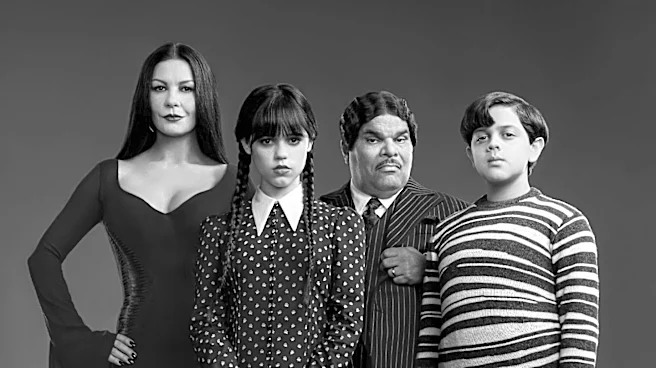
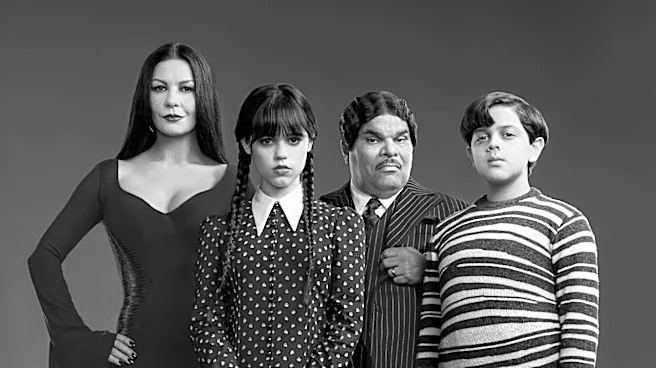
Her upbringing was split between her father's demanding acting career and a family home in rural Cabot, Vermont, offering a contrast to the typical Hollywood lifestyle. While her father has starred in numerous films and television series, including 'Boogie Nights,' 'Traffic,' and Netflix's 'Wednesday,' Margarita has not pursued a public career in entertainment. Her public appearances have been minimal, with one notable instance being the 2013 premiere of 'We're the Millers' alongside her father. Details regarding her education, profession, marital status, and net worth remain largely unconfirmed, as she has chosen to stay out of the public spotlight.
Why It's Important?
Margarita Briggs-Guzman's choice to maintain a private life highlights the varying degrees of public visibility within celebrity families. It underscores that while family connections can generate public interest, they do not automatically dictate an individual's career path or public persona. Her story offers a counter-narrative to the common expectation that children of famous personalities will also enter the entertainment industry or live highly publicized lives. This situation is important for understanding the dynamics of privacy in an era of pervasive media and public curiosity about celebrity families. It also emphasizes the distinction between being recognized through familial ties and achieving fame through personal accomplishments, prompting a discussion on the boundaries of public interest versus individual privacy.
Beyond the Headlines
Margarita Briggs-Guzman's narrative subtly challenges the pervasive nature of celebrity culture, where the lives of public figures' relatives often become subjects of intense scrutiny. Her limited public profile, despite her father's significant fame, raises questions about the ethical implications of media and public demand for personal information. It also reflects a broader societal trend where individuals, even those connected to public figures, can actively choose to disengage from the public eye. This choice can be seen as a form of agency in an environment that often pressures individuals into public roles. Her story encourages a re-evaluation of how biographical information is consumed and the importance of respecting personal boundaries, especially when verifiable details are scarce.