




What's Happening?
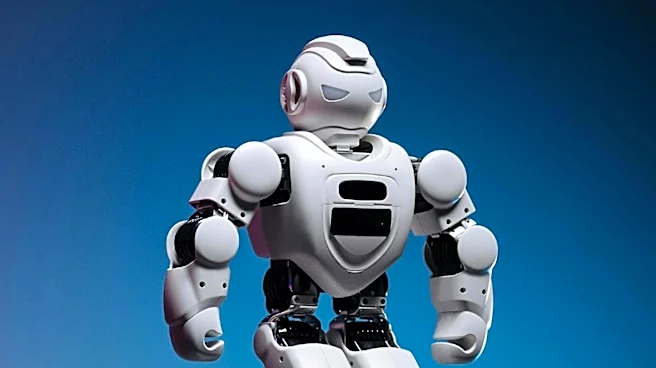
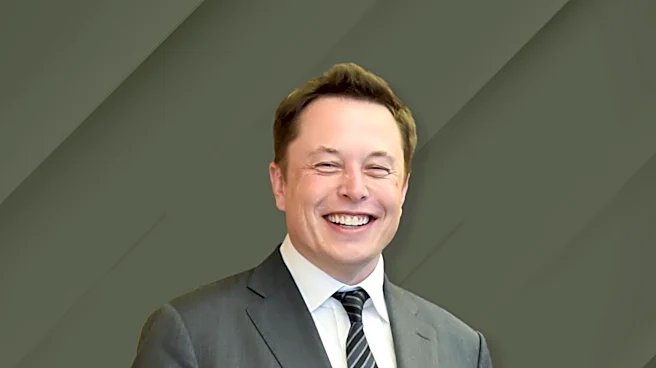
Elon Musk has made a bold prediction that artificial intelligence (AI) will usher in an 'age of abundance' within the next five years. Speaking to The Economist, Musk suggested that AI will surpass human intelligence, leading to a future where humanoid
robots could replace manual labor, potentially doubling the economy's size. He envisions a world where AI capabilities make traditional economic concerns, such as saving for retirement, obsolete. This prediction aligns with the views of some experts who foresee AI reshaping occupations rather than eliminating entire sectors. However, there are contrasting opinions, with some experts warning of potential job displacement and the need for urgent economic preparation.
Why It's Important?
Musk's prediction highlights the transformative potential of AI on the global economy and society. If AI leads to an 'age of abundance,' it could significantly alter economic structures, potentially decoupling income from labor. This raises questions about wealth distribution and the role of universal basic income. While some experts, like MIT's David Autor, believe AI will create new job opportunities, others warn of mass joblessness, particularly in white-collar sectors. The debate underscores the need for strategic planning to manage AI's impact on employment and economic inequality, as well as the governance of AI technologies.
What's Next?
The next steps involve addressing the governance challenges posed by AI's integration into society. Policymakers and industry leaders must consider how to distribute the wealth generated by AI and ensure that technological advancements strengthen rather than weaken societal structures. The focus will likely shift towards developing frameworks for machine participation in decision-making processes and preserving human agency in an increasingly automated world. As AI continues to evolve, stakeholders will need to balance innovation with ethical considerations and societal impacts.
Beyond the Headlines
The implications of Musk's prediction extend beyond economic and employment concerns. The potential for AI to participate in societal decisions raises ethical questions about autonomy and control. As AI technologies become more integrated into daily life, there will be a need to address issues of privacy, data ownership, and the ethical use of AI in decision-making. The transition to an AI-driven society may also challenge traditional notions of work and prosperity, prompting a reevaluation of what constitutes meaningful human activity in a post-scarcity world.