




What's Happening?
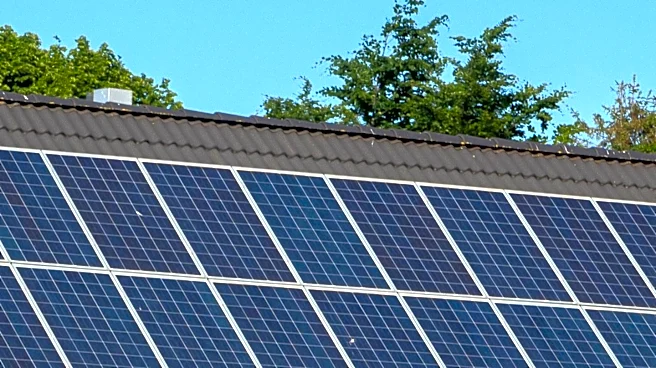
Tesla has officially discontinued its Solar Roof tile product, according to Electrek. The company has informed third-party installers that it will no longer supply solar roof tiles, opting instead to focus solely on conventional solar panels. Internally,
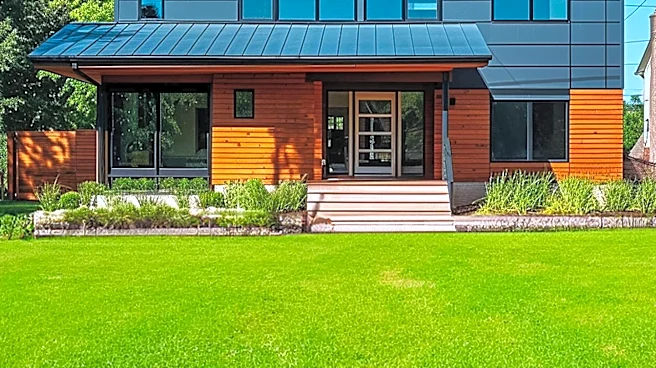
Tesla has concluded that the Solar Roof product is not financially viable. This move is corroborated by changes on Tesla's official website, where the long-standing tesla.com/solarroof page now redirects to tesla.com/solarpanels, and 'Solar Roof' has been removed from the Energy navigation menu. This formalizes a gradual retreat from the product, as Tesla had stopped reporting solar roof deployment figures in its quarterly reports in early 2024 and had largely phased it out of marketing efforts. The Solar Roof was initially unveiled in October 2016 and was central to the justification for Tesla's acquisition of SolarCity.
Why It's Important?
The discontinuation of Tesla's Solar Roof tiles highlights the significant challenges in bringing innovative, yet complex, renewable energy products to market at scale. The product was initially presented as a compelling alternative to traditional roofing and solar panels, promising lower costs and integrated aesthetics. However, the reality diverged sharply, with installed prices often far exceeding initial quotes and even increasing after contracts were signed, leading to a class-action lawsuit settled for $6 million in 2023. This failure to achieve economic viability and production targets, such as the unfulfilled promise of 1,000 installations per week, demonstrates the difficulties in manufacturing and installing such a specialized product. For consumers, it underscores the importance of scrutinizing new technologies and understanding the true costs and long-term feasibility, especially in the rapidly evolving renewable energy sector. For the broader solar industry, it reinforces the current dominance and economic efficiency of conventional solar panels.
What's Next?
Following the discontinuation of its Solar Roof tiles, Tesla is expected to fully pivot its solar energy strategy towards conventional solar panels paired with its Powerwall battery storage solutions. The company has already indicated plans for large-scale U.S. solar manufacturing, focusing on panels rather than tiles. This shift suggests that Tesla will concentrate its resources on more established and economically viable solar technologies. For customers who had invested in or were considering the Solar Roof, this means exploring alternative solar solutions, including conventional panels from Tesla or competing solar shingle options from other manufacturers. The market will likely see increased competition in the traditional solar panel sector, potentially driving further innovation and cost reductions in that segment. The experience with the Solar Roof may also lead to greater caution among consumers and investors regarding ambitious, unproven technologies in the renewable energy space.
Beyond the Headlines
The story of Tesla's Solar Roof extends beyond a simple product discontinuation; it offers insights into the complexities of innovation, market expectations, and corporate strategy. The product's initial launch was deeply intertwined with the controversial acquisition of SolarCity, raising questions about corporate governance and the use of product demonstrations to influence investor decisions. The subsequent legal challenges and the significant discrepancy between promised and actual pricing and installation rates highlight potential ethical considerations in marketing and sales practices for emerging technologies. Furthermore, the failure of the Solar Roof, despite its innovative concept, underscores the critical importance of manufacturing scalability and installation efficiency in the renewable energy sector. While the aesthetic appeal of integrated solar solutions remains strong, the economic and logistical hurdles proved too great for Tesla, suggesting that the path to widespread adoption of such advanced building-integrated photovoltaics is more challenging than initially perceived. This outcome could influence future investment and development in niche renewable energy products, favoring more proven and cost-effective solutions.