


What's Happening?
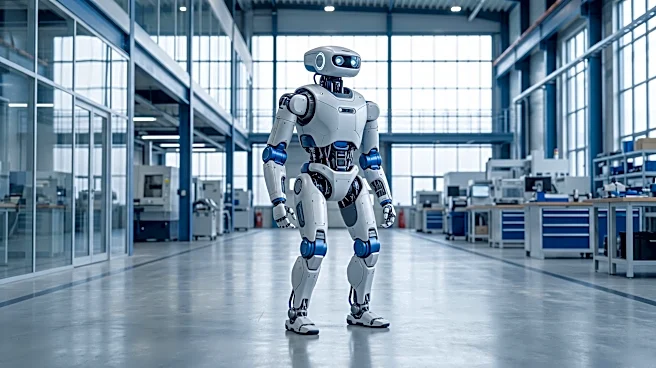
Khosla Ventures, a venture capital firm based in Menlo Park, CA, is supporting Rhoda AI, a company focused on developing generalist intelligent robots. Rhoda AI is actively recruiting for a Senior Camera Image Quality & Calibration Engineer in Sunnyvale,
CA. This role is crucial for ensuring the visual perception capabilities of their robots, involving the calibration of cameras geometrically and photometrically, tuning image quality and ISP settings, and establishing camera requirements. Rhoda AI has secured over $450 million in funding and is significantly investing in model research, infrastructure, hardware development, and manufacturing to advance generalist robotics. The position requires at least five years of experience in camera image quality, calibration, or imaging test for shipped products, along with a strong background in optics, electrical engineering, physics, or computer science. The engineer will work with various camera systems, including those for data collection and the robots' head and hand cameras, focusing on hands-on ownership rather than ML model training.
Why It's Important?
This hiring initiative by Rhoda AI, backed by Khosla Ventures, underscores the accelerating development in the field of robotics and artificial intelligence within the U.S. The focus on generalist intelligent robots capable of operating in complex, real-world environments signifies a move towards more versatile and autonomous robotic systems. The investment of over $450 million highlights significant venture capital confidence in the potential for advanced robotics to transform various industries. The role of a Senior Camera Image Quality & Calibration Engineer is critical because robust visual perception is fundamental for robots to navigate, interact with, and understand their surroundings effectively. Success in this area could lead to breakthroughs in automation, manufacturing, logistics, and even domestic applications, potentially creating new markets and job opportunities while also displacing certain types of labor. The emphasis on 'generalist' robots suggests a broader impact across multiple sectors rather than niche applications.
What's Next?
Rhoda AI's continued aggressive investment in research, infrastructure, hardware development, and manufacturing scale-up indicates a clear path toward bringing generalist robotics to market. The successful recruitment of specialized engineers, such as the Senior Camera Image Quality & Calibration Engineer, will be vital for achieving their technological milestones. As Rhoda AI progresses, it is likely to continue expanding its team, particularly in areas critical to robot functionality like perception, hardware, and AI model development. The firm's advancements could lead to pilot programs or commercial deployments of their robots in the coming years, potentially setting new industry standards for robotic capabilities. This could also spur further venture capital investment in the robotics sector, fostering a competitive environment for innovation and accelerating the adoption of advanced robotic solutions across various U.S. industries.
Beyond the Headlines
The development of generalist intelligent robots, as pursued by Rhoda AI, carries profound implications beyond immediate commercial applications. Ethically, the increasing autonomy and versatility of robots raise questions about human-robot interaction, job displacement, and the societal integration of advanced AI. Legally, the operation of such robots in complex environments will necessitate new regulatory frameworks concerning safety, liability, and data privacy. Culturally, the widespread adoption of generalist robots could reshape daily life, altering how tasks are performed, how industries operate, and even how humans perceive their own roles in a technologically advanced society. The focus on robust camera systems and image quality also highlights the growing importance of sensory data processing in AI, pushing the boundaries of machine perception and its integration with decision-making algorithms. This technological shift could trigger long-term changes in workforce dynamics, educational requirements, and the very fabric of human-centered design.