









What's Happening?
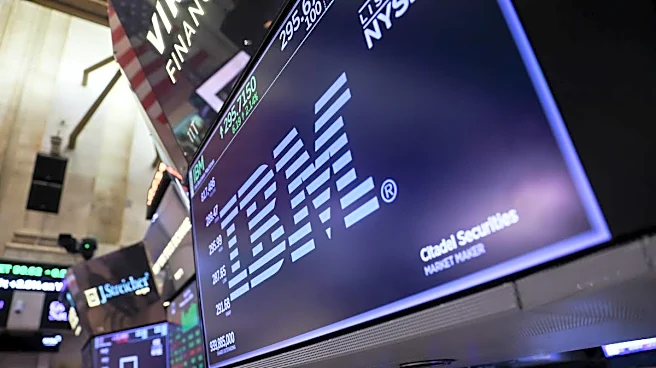
Oppenheimer has downgraded International Business Machines (IBM) from 'Outperform' to 'Perform' after the company's preliminary second-quarter results did not meet expectations. IBM reported a revenue of $17.2 billion, which was below both Oppenheimer's
estimates and Wall Street forecasts. The shortfall was attributed to weaker demand for transaction processing software, a shift in customer spending towards servers and storage, and delays in closing several large contracts. Despite strengths in areas like Red Hat and server and storage segments, these were insufficient to counteract the broader weaknesses. Oppenheimer noted that these challenges could hinder IBM's ability to meet its full-year guidance and achieve its targeted software growth in the coming years.
Why It's Important?
The downgrade of IBM's stock by Oppenheimer highlights significant challenges facing the company, particularly in adapting to shifts in enterprise technology spending. As businesses increasingly invest in artificial intelligence infrastructure and related hardware, IBM's traditional revenue streams are under pressure. This development could impact investor confidence and IBM's market valuation, potentially affecting its strategic initiatives and financial performance. The situation underscores the broader trend of technological transformation in the industry, where companies must pivot to new growth areas to remain competitive.
What's Next?
IBM may need to reassess its strategic priorities and accelerate its transition towards emerging technology sectors to regain investor confidence. The company might focus on enhancing its offerings in artificial intelligence and cloud computing to align with market demands. Stakeholders will be closely monitoring IBM's ability to close pending contracts and improve its financial performance in subsequent quarters. The company's response to these challenges will be crucial in determining its future market position and growth trajectory.