








What's Happening?
Loudoun County, Virginia, known as the largest concentration of data centers in the United States, is beginning to restrict new data center construction. This shift comes after years of booming development that significantly boosted the county's tax revenues,
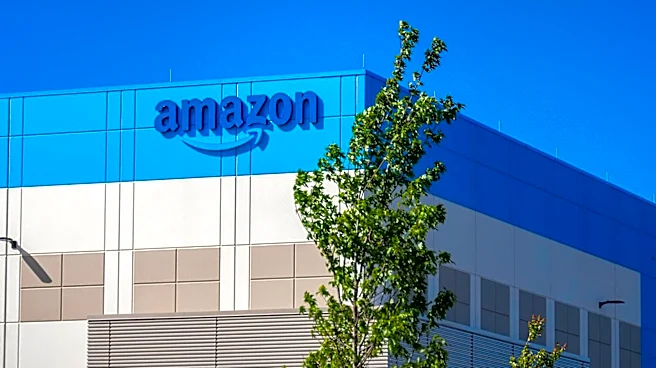
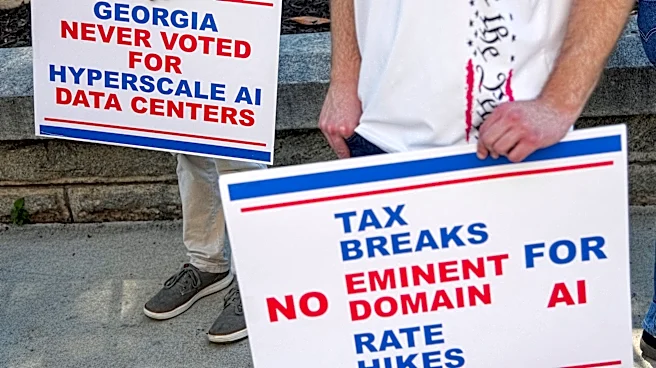
allowing for lower property taxes and funding for public services like schools and recreation centers. However, local residents are increasingly vocal about the negative impacts of these facilities. Complaints include noise pollution from diesel and gas turbine generators, the visual blight of large electricity transmission towers, and concerns about tech companies buying up residential properties at inflated prices. Loudoun Board of Supervisors member Juli Briskman stated that the county has become "addicted to the data centers for their tax revenues, but at what cost?" In response to these growing concerns, the county has ended its policy of zoning data centers as office parks, meaning future projects will now require public approval, a process expected to be slower and without guaranteed approval. Amazon's recent application for four new data centers in the region has already met resistance from some board members.
Why It's Important?
This development in Loudoun County is significant as it represents a growing national trend of communities grappling with the environmental and social costs of rapid data center expansion. While data centers are crucial for the digital economy and artificial intelligence, their massive consumption of power and water, coupled with noise and visual pollution, is increasingly impacting local quality of life. Loudoun County's decision to tighten regulations could serve as a precedent for other regions experiencing similar pressures, potentially slowing down the growth of critical digital infrastructure. This shift highlights a tension between economic development and community well-being, forcing local governments to re-evaluate their zoning and economic policies. The pushback from residents and the subsequent policy changes could lead to more stringent environmental impact assessments and community engagement requirements for future data center projects across the U.S., potentially increasing development costs and timelines for tech companies.
What's Next?
The immediate consequence of Loudoun County's policy change is that future data center projects will face a more rigorous and public approval process, likely leading to delays and potential rejections. Tech companies, including major players like Amazon, will need to adapt their development strategies to address community concerns and navigate a more complex regulatory landscape. This could involve investing more in noise reduction technologies, exploring alternative energy sources, or engaging in more proactive community outreach. Other counties and states across the U.S. that are experiencing similar data center booms may observe Loudoun County's approach and consider implementing similar restrictions or moratoriums. This could lead to a broader re-evaluation of how data centers are integrated into local communities, potentially shifting development towards areas with less residential impact or prompting innovations in more sustainable data center designs. The long-term implications could include a more distributed data center footprint or increased investment in renewable energy solutions to power these facilities.
Beyond the Headlines
The situation in Loudoun County underscores a deeper societal reckoning with the hidden costs of the digital age. While data centers are often perceived as clean, high-tech facilities, their environmental footprint, particularly in terms of energy and water consumption, is substantial. The shift from viewing data centers as purely economic boons to recognizing their potential for local disruption reflects a growing awareness of sustainability and quality of life issues. This could lead to a redefinition of "progress" in economic development, where tax revenues are weighed against environmental and social impacts. Furthermore, the pushback against data centers highlights a broader trend of local communities asserting more control over development that affects their daily lives, potentially leading to more localized and democratic decision-making processes regarding large-scale infrastructure projects. This could also spur innovation in data center technology, pushing for more efficient and less intrusive designs to meet both technological demands and community expectations.