






What's Happening?
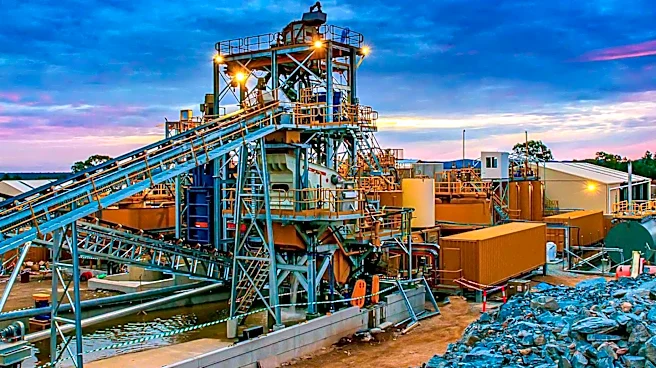
Perpetua Resources, a TSX- and Nasdaq-listed company, has been awarded $40 million in funding from the US Army's Defense Ordnance Technology Consortium. This funding is designated to evaluate the technical and economic feasibility of producing tungsten
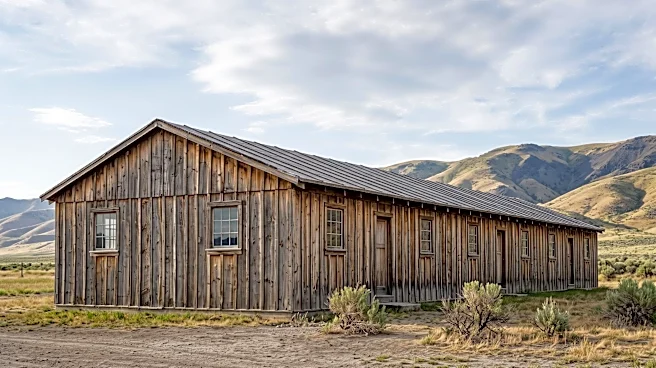
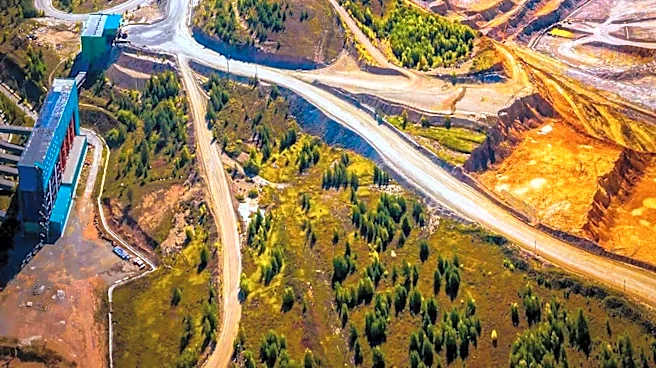
concentrate at the historical Stibnite mining district in Idaho, which Perpetua operates. The initiative is structured as a cost-share program, with Perpetua matching the US Army's $40 million contribution. The initial 18-month phase of the project is estimated to cost $18 million, equally shared by both parties. The funding will support crucial activities including drilling to define a potential tungsten mineral resource, collecting material for laboratory and bench-scale metallurgical testing, and permitting and engineering an exploration decline to access known tungsten mineralization. The Stibnite district has a history of supplying critical minerals, including nearly 50% of the tungsten and 90% of the antimony used by the US during World War II.
Why It's Important?
This funding is critical for bolstering the United States' domestic supply chain of tungsten, a strategic mineral essential for defense and industrial applications. The US has not had commercial tungsten mining since 2015, making it entirely reliant on imports. This dependency poses a significant national security risk, as geopolitical instabilities can disrupt supply and impact defense readiness. By investing in Perpetua's Stibnite project, the US Army aims to re-establish a domestic source of high-grade tungsten, reducing vulnerability to foreign supply disruptions. The project could also stimulate economic growth in Idaho through job creation and local investment. Furthermore, the historical significance of Stibnite as a key supplier during World War II underscores the strategic importance of reactivating such domestic resources to ensure national resilience and economic security in critical mineral sectors.
What's Next?
The immediate next steps involve Perpetua Resources designing and implementing the tungsten exploration project, with the initial 18-month phase focusing on surface exploration drilling and metallurgical testwork. This will be followed by the design, permitting, and potential construction of an exploration decline to access high-grade tungsten mineralization. Successful delineation of a significant tungsten resource could lead to further investment and development, potentially culminating in commercial tungsten production. This would mark a pivotal moment for US mineral independence. Stakeholders, including the US Army, Perpetua Resources, and local communities in Idaho, will closely monitor the project's progress. Future developments will likely involve ongoing environmental assessments and regulatory approvals, as well as potential partnerships to scale up production if the feasibility studies prove positive. The project's success could also encourage similar initiatives for other critical minerals in the US.
Beyond the Headlines
The US Army's investment in the Stibnite project highlights a broader strategic shift towards re-shoring critical mineral production and reducing reliance on foreign adversaries for essential resources. This move has significant geopolitical implications, as it aims to mitigate economic leverage held by countries that dominate global mineral supply chains. Environmentally, the project will face scrutiny regarding its impact, given the historical mining activities in the area; Perpetua will need to demonstrate responsible mining practices and reclamation efforts. Ethically, the push for domestic mineral production balances economic and national security interests against environmental conservation concerns. Long-term, this initiative could catalyze a resurgence in US mining, driving technological advancements in extraction and processing to meet modern environmental standards. It also underscores a renewed understanding of resource nationalism and the importance of a robust domestic industrial base for national security in an increasingly complex global landscape.