






What's Happening?
A recent study indicates that the accuracy of fitness trackers is significantly influenced by where they are worn on the body and various environmental factors, rather than solely by the brand. Research, including one study on the Fitbit Inspire 2, found
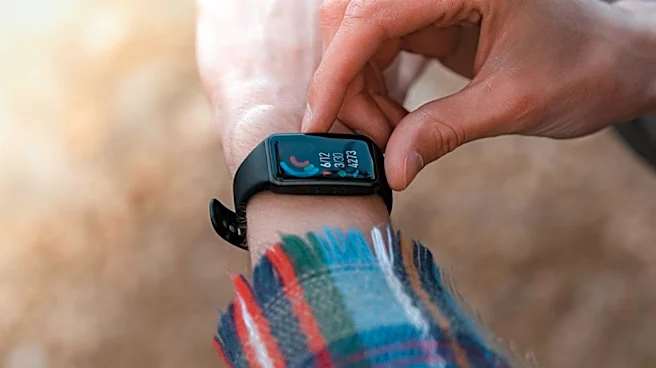
that wearing a tracker three finger widths above the wrist bone reduced movement error to 7.3% compared to 20.5% when worn one finger width up. This is attributed to the sensor sitting on flatter, softer tissue that moves less. Tattoos can also affect accuracy, often causing the sensor to return no data rather than incorrect readings, with 36% of individuals experiencing total data dropout over tattooed skin at rest. Cold hands can reduce the optical pulse signal by 41%, leading to missing data. Hairy arms, however, were found to have no significant impact on accuracy in the study. Manufacturers like Apple, Google, Garmin, and Samsung provide guidance on optimal placement, generally recommending wearing devices above the wrist bone and ensuring a snug fit, especially during exercise.
Why It's Important?
The findings have significant implications for individuals relying on fitness trackers for health monitoring and for the wearable technology industry. Inaccurate data can lead to misinformed health decisions, potentially affecting workout effectiveness, calorie expenditure calculations, and overall health assessments. For instance, if a tracker consistently undercounts steps due to improper placement or overestimates calorie burn, users might not achieve their fitness goals or could misinterpret their activity levels. The issue of data dropout due to tattoos or cold weather highlights a limitation in current optical sensor technology, which could impact users in diverse demographics and climates. This information is crucial for consumers to understand the limitations of their devices and for manufacturers to improve sensor design and provide clearer, more effective user guidelines to enhance data reliability and user trust.
What's Next?
Consumers should review manufacturer guidelines for optimal placement and usage of their fitness trackers, particularly regarding tightness and position on the arm. For those with tattoos, experimenting with different placement areas or considering alternative tracking methods, such as chest straps for heart rate, might be necessary to ensure accurate data. Manufacturers are likely to continue research into improving sensor technology to mitigate issues caused by skin conditions, tattoos, and environmental factors. Future device iterations may feature more robust sensors or advanced algorithms that can compensate for these variables. Additionally, clearer in-app guidance or device-specific recommendations based on individual user characteristics could become more prevalent, helping users optimize their tracker's performance and data accuracy.
Beyond the Headlines
The varying accuracy of fitness trackers based on physical and environmental factors points to a broader challenge in the personalization and reliability of health technology. While these devices offer convenience and motivation, their limitations underscore the need for critical interpretation of the data they provide. The ethical implications of data privacy, especially with the integration of AI, also come into play, as highlighted by concerns about how this information might be used by entities like insurance companies. This raises questions about the balance between technological advancement in health monitoring and the safeguarding of personal data. The findings also suggest a potential for health disparities if certain demographics, such as individuals with darker skin tones or extensive tattoos, consistently receive less accurate data, impacting their ability to effectively monitor their health and fitness.