






What's Happening?
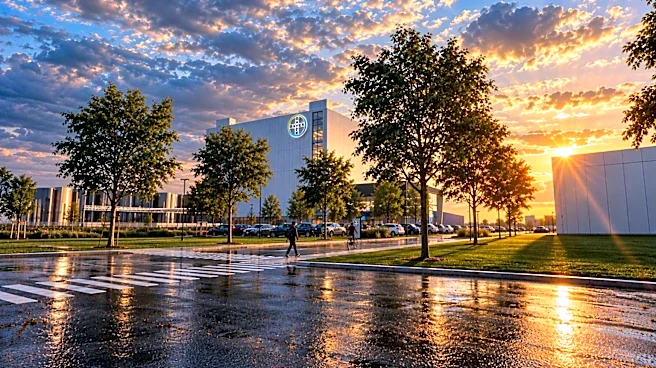
Bayer CEO Bill Anderson has announced a significant investment of $2.2 billion to establish a new pharmaceutical manufacturing facility in New Albany, Ohio. This greenfield project marks Bayer's first major pharma production site in North America and
is part of a broader restructuring program aimed at reducing costs and improving profitability for the company. The new campus is designed to be a flexible, modular hub incorporating advanced digital and automation technologies. It will support Bayer's oncology, cardiovascular, and renal care business units, with the first module for drug substance manufacturing expected to be operational by 2031, followed by a drug product manufacturing module in 2034. This investment contributes to Bayer's total U.S. investment exceeding $7 billion over the last five years.
Why It's Important?
This substantial investment by Bayer in a U.S. manufacturing facility is important for several reasons. It signifies a strategic move by a major pharmaceutical company to bolster its production capabilities within the United States, potentially creating a more resilient supply chain for critical medicines. The creation of approximately 600 permanent jobs and an additional 1,500 construction jobs will provide a significant economic boost to the New Albany area and the broader U.S. economy. Furthermore, this decision aligns with a trend among large pharmaceutical companies to invest domestically, partly in response to potential tariffs on imported medicines, as indicated by the Trump administration. This could lead to increased pharmaceutical independence and innovation within the U.S., benefiting patients through improved access to high-quality medicines.
What's Next?
The immediate next steps involve the commencement of construction for the new facility in New Albany, Ohio. Bayer anticipates the first module, dedicated to drug substance manufacturing, to become operational by 2031, with the second module for drug product manufacturing following in 2034. The company will also focus on recruiting and training the approximately 600 employees needed for the facility's full operation. This investment is part of a larger restructuring program led by CEO Bill Anderson, suggesting further strategic announcements or operational changes within Bayer could be forthcoming as they aim to enhance profitability and reduce costs. The move may also encourage other pharmaceutical companies to consider similar domestic investments, potentially shaping future U.S. pharmaceutical manufacturing landscapes.
Beyond the Headlines
Bayer's decision to invest heavily in a U.S. manufacturing facility reflects a broader shift in global supply chain strategies, particularly within the pharmaceutical sector. The emphasis on advanced digital and automation technologies in the new plant highlights a move towards more efficient and technologically sophisticated manufacturing processes. This could set a new standard for pharmaceutical production, potentially influencing industry-wide adoption of similar technologies. The investment also underscores the increasing importance of national security and economic resilience in critical sectors like healthcare, as governments and corporations seek to reduce reliance on foreign manufacturing. This trend could lead to a revitalization of domestic manufacturing capabilities and a re-evaluation of global trade policies in the pharmaceutical industry.