




What's Happening?
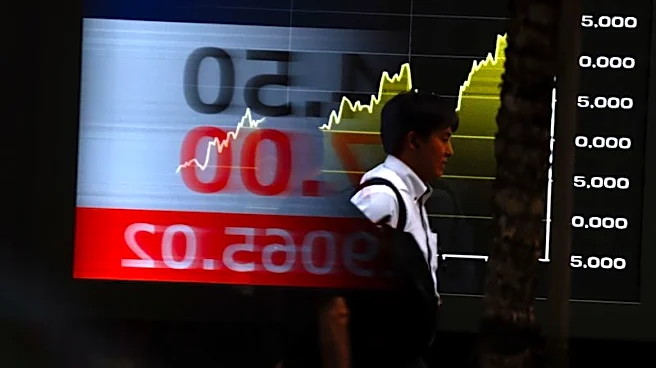
Gold prices experienced a significant increase, climbing over 4% as a result of a weaker U.S. dollar and lower Treasury yields. Spot gold rose by 4.3% to $4,252.74 per ounce, marking its highest level since June 22. U.S. gold futures also saw a rise of 3.7%
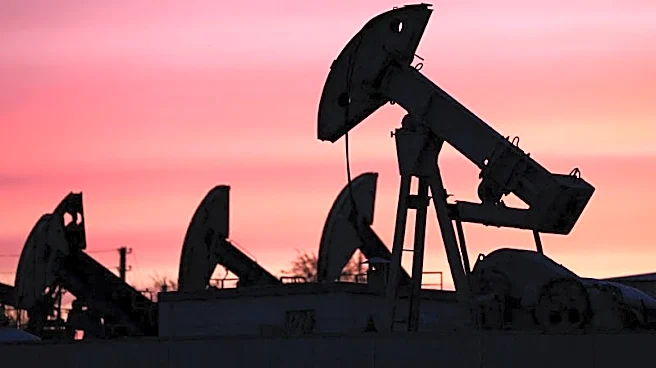
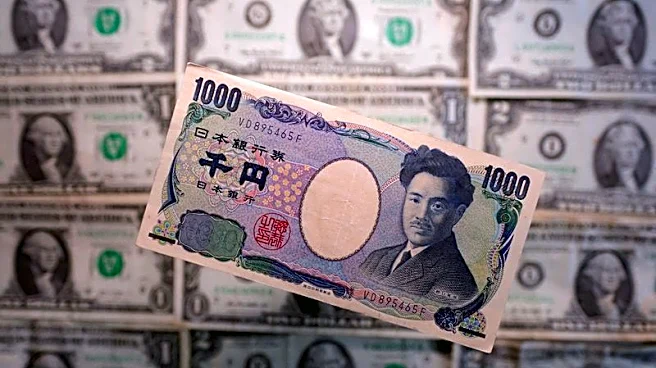
to $4,305.20. The market is closely monitoring developments in the Middle East, particularly the U.S.-Iran conflict, for potential impacts on inflation and interest rate outlooks. President Trump mentioned having 'very good discussions' with Iran, which has raised expectations for a resolution to the ongoing conflict. Additionally, the U.S. dollar's decline against the Japanese yen has made gold more affordable for international buyers.
Why It's Important?
The rise in gold prices is significant as it reflects broader economic conditions, including currency fluctuations and geopolitical tensions. A weaker dollar typically makes gold more attractive as an investment, especially for foreign buyers. The ongoing discussions between the U.S. and Iran could lead to a de-escalation of tensions, potentially stabilizing markets. However, the possibility of a Federal Reserve rate hike remains, which could impact gold's appeal due to its non-yielding nature. Investors are currently pricing in a 57% chance of a rate hike in the upcoming central bank meeting, which could influence future gold prices.
What's Next?
The market will continue to watch for developments in U.S.-Iran relations and any announcements from the Federal Reserve regarding interest rates. The outcome of these events could significantly impact gold prices and investor strategies. Additionally, the release of U.S. jobs data will be crucial in shaping economic forecasts and monetary policy decisions.