




What's Happening?
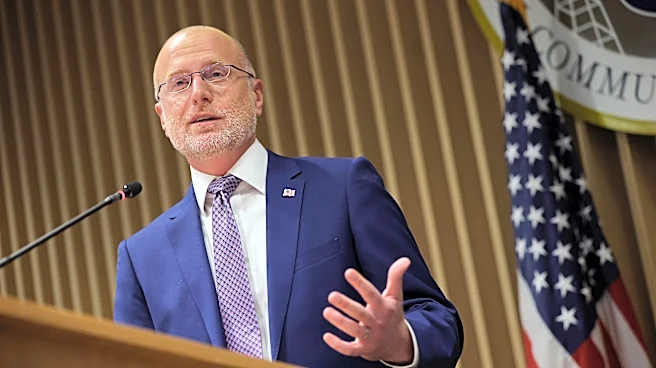
FCC Chairman Brendan Carr has announced that the Federal Communications Commission (FCC) will vote on a proposal to update its local ownership rules for radio and television broadcasters. The current regulations, which limit the number of stations a single
entity can own, are considered by Carr to be 'stuck in the past.' The proposed order aims to replace the existing 'bright line' approach with a more granular, case-by-case review, treating current ownership limits as baselines. Additionally, the proposal seeks to eliminate subcaps that restrict the balance of AM and FM stations an entity can own in a local market. Carr argues that local stations are no longer just competing with other local broadcasters but also with 'Big Tech companies and streamers' that do not face similar market restrictions. He emphasizes that modernizing these regulations is crucial to prevent local broadcast stations from being unable to compete and potentially 'go dark,' which would leave communities without essential local news.
Why It's Important?
This proposed modernization of FCC ownership rules is significant for the U.S. media landscape, particularly for local radio and television stations. The current regulations, established in a different media environment, are seen as hindering local broadcasters' ability to compete effectively against large technology companies and streaming services. By relaxing these restrictions, the FCC aims to create a more level playing field, potentially allowing local stations to consolidate or expand, thereby gaining resources to invest in local content and journalism. This could help preserve local news outlets, which have faced increasing financial pressures and closures. NAB President & CEO Curtis LeGeyt supports the initiative, stating that updating these rules is 'critical to ensuring local radio and television stations can better compete.' The outcome of this vote will directly impact the financial viability and operational strategies of thousands of local broadcasters across the country, influencing the diversity and availability of local news and information for American communities.
What's Next?
The FCC is scheduled to vote on this proposed order on December 17. If approved, the new rules would encourage 'good deals that enable broadcasters to serve the public interest,' while still allowing the agency to block 'bad ones,' according to Chairman Carr. The National Association of Broadcasters (NAB) has expressed its support and looks forward to reviewing the item and working with the Commission to implement reforms. The decision will likely lead to a period of adjustment and potential consolidation within the local broadcast industry as stations explore new ownership structures and investment opportunities. The long-term impact will depend on how broadcasters utilize the relaxed rules to strengthen their competitive position against digital giants and continue providing local content. The FCC's move could set a precedent for future regulatory adjustments in response to the evolving media landscape.
Beyond the Headlines
The debate over broadcast ownership rules touches upon fundamental questions regarding media consolidation, local journalism, and the role of regulation in a rapidly changing digital age. Critics of deregulation often raise concerns about potential reductions in local content diversity, job losses, and the concentration of media power in fewer hands. Conversely, proponents argue that outdated regulations stifle innovation and prevent local outlets from adapting to new market realities, ultimately leading to their demise. This FCC proposal represents a strategic shift, acknowledging the competitive pressures from 'Big Tech' and streaming services. It highlights a broader trend of regulatory bodies re-evaluating traditional industry rules in light of technological advancements. The outcome could influence not only the economic health of local broadcasters but also the future of local news and information access, potentially shaping how communities receive and engage with local content in the coming years.