







What's Happening?
The Federal Reserve is facing a critical decision on whether to maintain or adjust U.S. short-term borrowing costs, with projections indicating a potential shift in policy. A majority of Fed policymakers are expected to keep rates steady, but some may
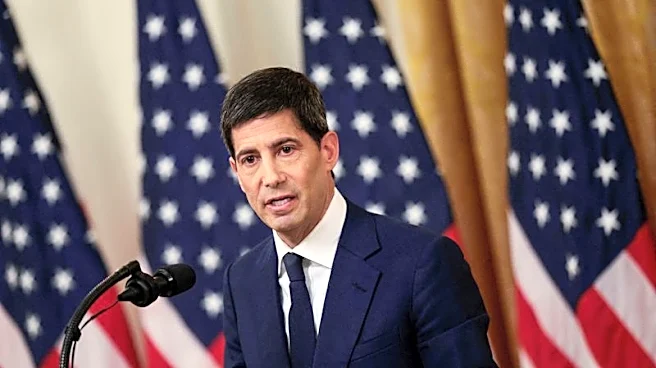
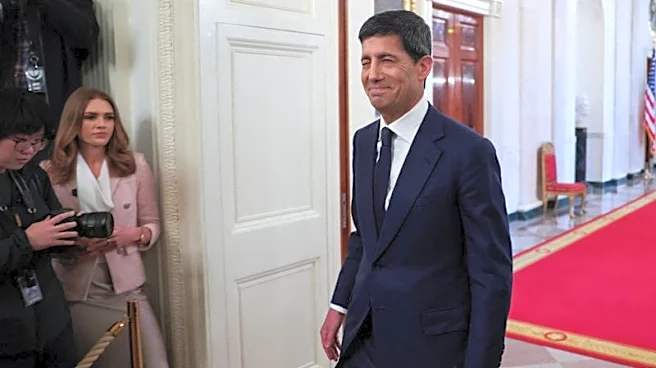
consider a rate hike to address rising inflation. The new Fed Chairman, Kevin Warsh, appointed by President Trump, is navigating complex economic conditions, including stronger-than-expected job gains and inflation pressures exacerbated by the Iran war. Warsh's stance on interest rates remains uncertain, as he balances the need for economic stability with the administration's expectations for lower rates.
Why It's Important?
The Fed's decision on interest rates has significant implications for the U.S. economy, affecting everything from consumer borrowing costs to business investment. A rate hike could help curb inflation but may also slow economic growth and impact the labor market. Conversely, maintaining or lowering rates could stimulate economic activity but risk further inflation. The Fed's approach will influence financial markets, investor confidence, and economic policy. Warsh's leadership and communication strategy will be crucial in managing expectations and maintaining economic stability.
What's Next?
The Fed is expected to release updated economic projections, including forecasts for inflation and unemployment. These projections will provide insights into the Fed's policy direction and economic outlook. Warsh may also initiate a review of Fed communications, potentially altering how policy decisions are conveyed to the public. Stakeholders, including economists and financial analysts, will closely analyze the Fed's statements and projections to gauge future policy moves. The outcome of these deliberations will have far-reaching effects on the U.S. economy and global financial markets.