



What's Happening?
The Office of the United States Trade Representative (USTR) has announced an extension for 178 existing Section 301 tariff exclusions on certain imports from China. This extension, published in the Federal Register on November 10, 2026, prolongs the exclusions through
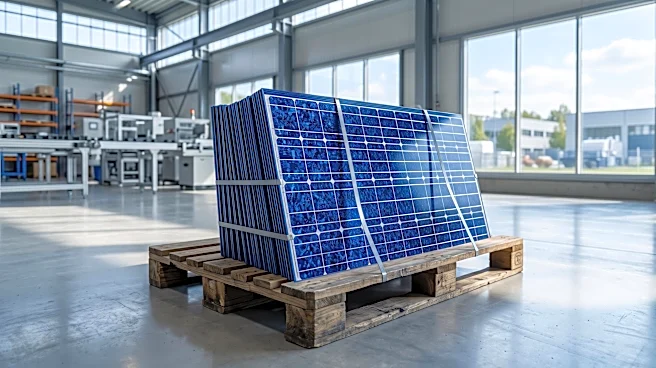
January 9, 2027. The decision provides an additional two months of relief from Section 301 duties for qualifying importers of Chinese-origin products. The extended exclusions include 164 product-specific items and 14 exclusions for solar manufacturing equipment. These exclusions were previously set to expire on November 9, 2026. The USTR's action ensures there is no interruption in the exclusion period for eligible entries, applying to goods entered for consumption or withdrawn from warehouses starting November 10, 2026. The USTR considered public comments, advice from advisory committees, and recommendations from the interagency Section 301 Committee in making this determination. The extension is a specific USTR action and should not be confused with other trade developments.
Why It's Important?
This extension is significant for U.S. businesses that rely on importing the 178 specified Chinese-origin products, including solar manufacturing equipment. Without this relief, these products would have been subject to additional Section 301 duties, which can be as high as 25% for some items. Such duties directly impact landed costs, purchasing decisions, and pricing strategies for U.S. importers. The two-month extension provides crucial breathing room, allowing businesses to manage their supply chains and financial planning without an immediate increase in costs. It also signals a continued, albeit temporary, effort by the U.S. government to balance trade enforcement with the needs of domestic industries that depend on these imports. The decision reflects ongoing considerations of economic impacts on U.S. companies and consumers, as well as the complexities of U.S.-China trade relations. Importers must ensure their products meet the precise descriptions and Harmonized Tariff Schedule of the United States (HTSUS) statistical reporting numbers to qualify for the exclusions.
What's Next?
The extended tariff exclusions will remain in effect until January 9, 2027. Importers are advised to use this additional time to confirm product eligibility, review customs entry procedures, and assess their financial exposure should the exclusions not be extended again. The U.S. Customs and Border Protection (CBP) is expected to issue specific instructions regarding entry guidance and implementation of these extended exclusions. Businesses should monitor CBP updates and verify applicable product descriptions. While the extension offers temporary relief, it does not guarantee future extensions. Therefore, companies should prepare for potential duty increases after the new deadline. The USTR may consider further modifications or extensions based on ongoing evaluations and trade discussions. This period also allows for continued dialogue between the U.S. and China regarding trade policies, which could influence future decisions on these tariffs.
Beyond the Headlines
The repeated extensions of these Section 301 exclusions highlight the intricate balance the U.S. government seeks to strike between addressing concerns about China's trade practices and mitigating adverse impacts on American businesses and consumers. While the Section 301 tariffs were initially imposed to pressure China on issues like intellectual property and forced technology transfer, the ongoing exclusions suggest a recognition of the practical difficulties and economic costs associated with a full implementation of these tariffs. The focus on specific product exclusions rather than a blanket removal indicates a nuanced approach, targeting certain sectors for relief while maintaining pressure on broader trade issues. This strategy reflects the complex interdependence of the U.S. and Chinese economies, where punitive measures can have unintended consequences for domestic industries. The continuous evaluation and temporary nature of these extensions underscore the dynamic and often unpredictable landscape of international trade policy.