




What's Happening?
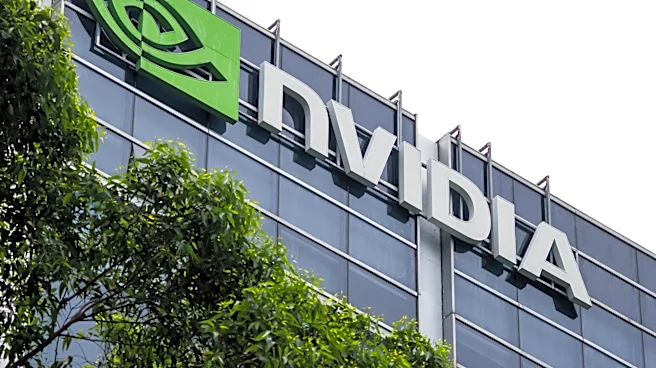
Jensen Huang, the founder and CEO of Nvidia for 33 years, has resigned, leading to a significant drop in the company's stock value and a $92 billion paper loss for Huang. His resignation on November 11 followed disclosures of personal behavior deemed
inconsistent with Nvidia's code of conduct, standards, and cultural norms, as stated by board chair Harvey C. Jones. The board has launched an independent investigation into these matters. Additionally, the Securities and Exchange Commission (SEC) staff is reportedly examining potential accounting issues at Nvidia, though an inquiry does not equate to a finding of wrongdoing. The company has appointed Colette Kress as interim CEO, but a permanent successor has not yet been named, creating leadership uncertainty. This situation contrasts sharply with previous founder handoffs at other major companies, where successors were typically announced concurrently with the founder's departure.
Why It's Important?
The departure of a long-standing and influential founder like Jensen Huang, especially under a cloud of personal conduct issues and an SEC inquiry, introduces significant instability for Nvidia and its investors. Historically, the performance of companies after a founder's exit has been mixed, with some stocks outperforming and others underperforming the S&P 500 in the subsequent year. The lack of an immediate, named successor at Nvidia, coupled with ongoing investigations, amplifies this uncertainty. Shareholders face potential volatility as the market reacts to leadership changes and the outcomes of the board's internal probe and the SEC's examination. The situation could impact Nvidia's strategic direction, investor confidence, and its competitive standing in the technology sector, particularly given its prominence in areas like AI and accelerated computing.
What's Next?
The immediate future for Nvidia involves addressing three key areas of uncertainty. First, the company must identify and appoint a permanent successor to Jensen Huang, a process that is currently underway with Colette Kress serving as interim CEO. The selection of a new leader will be crucial for establishing stability and a clear path forward. Second, the outcomes of both the board's internal investigation into Huang's conduct and the SEC's examination into potential accounting issues will significantly influence Nvidia's corporate governance and public perception. These inquiries could lead to further disclosures or regulatory actions. Third, investors will closely monitor Huang's stock filings; any large sales of his substantial Nvidia holdings in the coming months, while he is still considered an insider, would be publicly noticed and could signal his long-term disengagement or financial strategy, potentially affecting market sentiment.
Beyond the Headlines
The circumstances surrounding Jensen Huang's resignation at Nvidia highlight broader themes concerning corporate governance, executive accountability, and the intersection of personal conduct with professional leadership. The board's swift action and public statement regarding Huang's behavior underscore an increasing emphasis on ethical standards and cultural alignment within corporations, even for highly successful founders. The SEC's involvement, regardless of its outcome, points to the continuous scrutiny of financial practices in major tech companies. This event could serve as a case study for how companies navigate leadership transitions, especially when personal scandals and regulatory investigations converge, potentially influencing future corporate policies on executive conduct and succession planning across the industry. The long-term impact on Nvidia's brand and its ability to attract and retain top talent will also be a critical, less obvious implication.