








What's Happening?
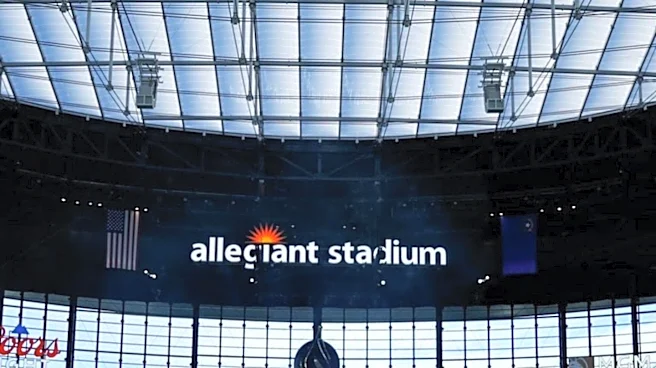
The Las Vegas Stadium Authority has approved $75 million in public funds to support a $158 million upgrade project for the north entrance of Allegiant Stadium. The remaining cost of the project will be covered by the Las Vegas Raiders. This upgrade aims
to improve pedestrian access and the overall guest experience at the 65,000-seat stadium, which opened in 2020 at a cost of $2 billion. The project will include the addition of pedestrian and event decks, a plaza, and transportation enhancements. Construction is anticipated to commence after the Raiders' current season concludes, with a target completion date in late 2028 or before the 2029 Super Bowl, which Allegiant Stadium is scheduled to host. The public funds for this initiative will be sourced from surplus room tax revenue.
Why It's Important?
This investment is crucial for maintaining Allegiant Stadium's competitive edge as a premier venue for major events, including NFL games, college football championships, and concerts. Steve Hill, president and CEO of the Las Vegas Convention and Visitors Authority, emphasized the stadium's role as a critical community asset that drives tourism and, consequently, the local economy. With new stadiums emerging nationwide, this upgrade is seen as essential to ensure Allegiant Stadium can continue to attract high-profile events and compete effectively. The project also protects the initial $750 million public investment made in the stadium's construction by enhancing its infrastructure and guest experience, thereby securing its long-term viability and economic contribution to the region. The Raiders will be responsible for the maintenance of the new additions, further safeguarding public funds.
What's Next?
Construction on the north entrance upgrade is slated to begin after the current Raiders' season concludes. The goal is to complete the project by late 2028 or prior to the 2029 Super Bowl, which Allegiant Stadium is set to host. The Las Vegas Stadium Authority will continue to oversee the project, ensuring that the public funds are utilized effectively and that the enhancements meet the stated objectives of improving access and the guest experience. The Raiders will be responsible for the ongoing maintenance of the new infrastructure. This development is expected to solidify Allegiant Stadium's position as a top-tier venue, potentially attracting more major events and continuing to boost tourism in Las Vegas.
Beyond the Headlines
The decision to allocate public funds for this stadium upgrade highlights the ongoing debate surrounding the use of taxpayer money for professional sports facilities. While proponents argue that such investments stimulate tourism and economic growth, critics often question the long-term financial returns for the public. In this case, the use of surplus room tax revenue, rather than direct general fund allocations, might mitigate some of these concerns. However, it still represents a public commitment to a private entity. The emphasis on maintaining competitiveness against new stadiums underscores the intense rivalry among cities to host major events, often leading to significant public-private partnerships. This trend reflects a broader economic strategy where large-scale entertainment venues are viewed as essential components of a city's tourism and economic development portfolio.