




What's Happening?
Hyundai is maintaining its commitment to hydrogen fuel cell technology, particularly for commercial fleets, despite a challenging market for passenger vehicles. Scott Nargar, senior manager of future mobility and government relations at Hyundai Australia,
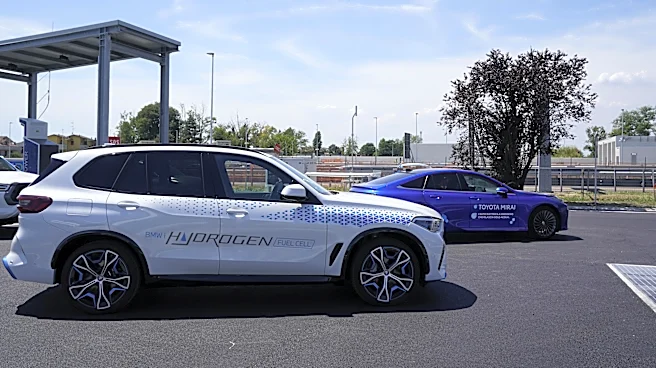
acknowledged the difficulty in finding customers for hydrogen cars. The second-generation Hyundai Nexo, a global model launched in 2025, offers a range of approximately 435 miles on a single tank. While global fuel cell vehicle sales saw a modest rebound of 24.4% in 2025, reaching 16,011 units, this growth was primarily driven by South Korea and China, largely due to government subsidies and commercial vehicle sales. North American sales, however, declined by 37.7% to just 365 units. Hyundai broke ground in late 2025 on a 930 billion won (approximately $700 million) fuel cell plant in Ulsan, South Korea, under its HTWO brand, aiming to produce 30,000 fuel cell systems annually for various applications by 2027.
Why It's Important?
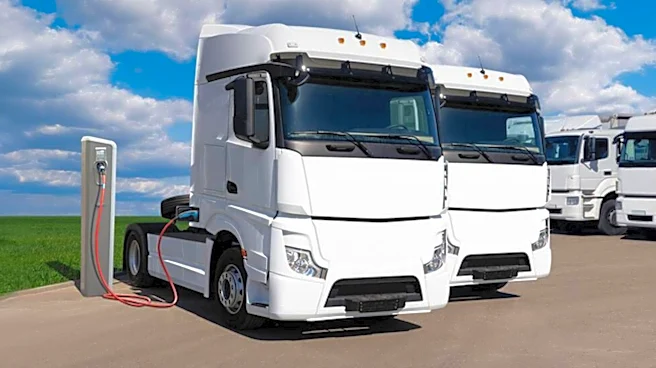
Hyundai's continued investment in hydrogen technology, particularly for fleets, highlights a strategic shift in the hydrogen economy. The challenges faced by passenger hydrogen vehicles, such as scarce refueling stations and higher costs compared to battery electric vehicles, underscore the need for targeted applications. Fleets, including buses, port vehicles, and mining equipment, offer a more viable pathway for hydrogen adoption due to predictable demand and the ability to support high-volume refueling stations. This approach can help finance the necessary infrastructure development. The disparity in sales between regions like South Korea and North America demonstrates the critical role of government incentives and infrastructure in driving hydrogen adoption. For the U.S., this suggests that a lack of consistent policy support and infrastructure development could hinder the growth of hydrogen fuel cell technology, potentially impacting decarbonization efforts in transportation and industrial sectors.
What's Next?
Hyundai's Ulsan plant, set for completion in 2027, will focus on producing fuel cell systems for trucks, machinery, and ships, indicating a clear direction towards commercial and industrial applications. This focus is expected to drive down the cost curve for fuel cell stacks and generate real-world durability data, which can benefit broader hydrogen applications. The success of this strategy will depend on the ability to secure 'offtake agreements'—commitments from buyers for green hydrogen—which has been a hurdle for many hydrogen projects globally. Governments that wish to see hydrogen play a significant role in transport may need to shift their support towards fleets and high-utilization corridors, rather than broadly subsidizing retail stations. The ongoing development of the hydrogen economy will likely see continued efforts to match hydrogen supply with demand, particularly in sectors where direct electrification is challenging.
Beyond the Headlines
The struggle to find customers for hydrogen passenger vehicles, despite their environmental benefits and range capabilities, reveals a broader market dynamic: technology alone is insufficient without a robust ecosystem. The 'demand discovery problem' in the hydrogen economy—where buyers and sellers struggle to connect, agree on pricing, and verify carbon intensity—is a critical barrier. This situation highlights the ethical and economic implications of transitioning to new energy sources; while the technology exists, the societal and infrastructural shifts required are substantial. The role of government policy, as seen in South Korea's success with subsidies and station building, is paramount in de-risking early-stage markets and fostering adoption. The long-term success of hydrogen will depend on overcoming these systemic challenges, moving beyond technological feasibility to practical, economically viable, and widely accessible solutions.