




What's Happening?
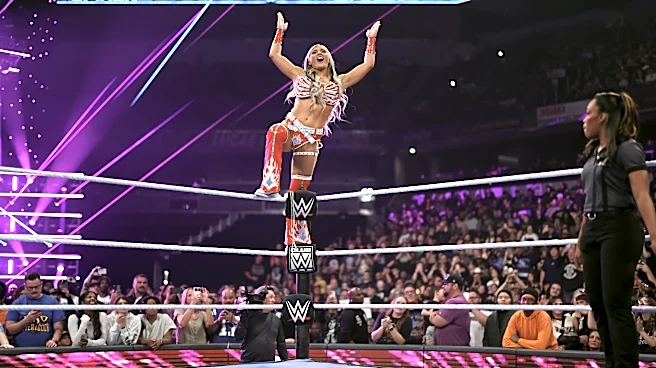
Tiffany Stratton, a professional wrestler, is preparing for a significant shift in her in-ring persona, known as a 'heel turn,' where she will adopt a more aggressive and villainous character. She described this upcoming change as 'me on steroids,' indicating
an amplified version of her personality. Stratton shared her insights during an interview on the Battleground podcast, where she discussed the realization that blending her real-life self with her wrestling character creates a more relatable and engaging experience for the audience. This approach, where wrestlers present an 'extended version of themselves on steroids,' has been a successful formula for many top stars in the industry. Stratton expressed excitement about this evolution, noting that it will be 'different' and she is eager to see how it unfolds.
Why It's Important?
This strategic 'heel turn' by Tiffany Stratton is important for several reasons within the professional wrestling industry. For Stratton, it represents a pivotal career move that could elevate her status and fan engagement. By embracing a more aggressive and larger-than-life persona, she aims to connect with the audience on a deeper level, as authenticity, even in a heightened form, often resonates more strongly. This shift reflects a broader trend in professional wrestling where the lines between a performer's real personality and their on-screen character are increasingly blurred to foster greater relatability. For WWE, this move could generate renewed interest in Stratton's storylines and matches, potentially boosting viewership and merchandise sales. Successful character transformations are crucial for maintaining dynamic narratives and keeping the product fresh for its dedicated fanbase, impacting the entertainment value and commercial viability of the promotion.
What's Next?
Following her announcement, Tiffany Stratton is expected to gradually implement her 'heel turn' in upcoming WWE appearances, likely on shows like SmackDown. This transition will involve changes in her in-ring style, promos, and interactions with other wrestlers and the audience, aligning with her new aggressive persona. Fans will be watching to see how she integrates her 'real-life' self into this amplified character, and how the WWE creative team supports this evolution through new storylines and rivalries. The success of this transformation will be measured by fan reaction, merchandise sales, and her position on the card. This period will be critical for Stratton to solidify her new identity and establish herself as a prominent 'heel' in the women's division, potentially leading to championship opportunities and high-profile matches.
Beyond the Headlines
Tiffany Stratton's decision to blend her real-life persona with her wrestling character, describing it as 'me on steroids,' highlights a deeper evolution in professional wrestling storytelling. This approach moves beyond traditional, often one-dimensional, character portrayals towards more nuanced and psychologically complex figures. It reflects a growing demand from audiences for authenticity and relatability, even within the theatrical confines of sports entertainment. This trend can lead to more compelling narratives, as the emotional investment in a character is amplified when viewers perceive a genuine connection to the performer. Ethically, it raises questions about the boundaries between public and private personas, and how much of a performer's true self is 'safe' to expose. Culturally, it signifies a shift in how 'villains' are perceived, moving from purely evil archetypes to characters with understandable, albeit exaggerated, motivations, enriching the overall narrative landscape of professional wrestling.