







What's Happening?
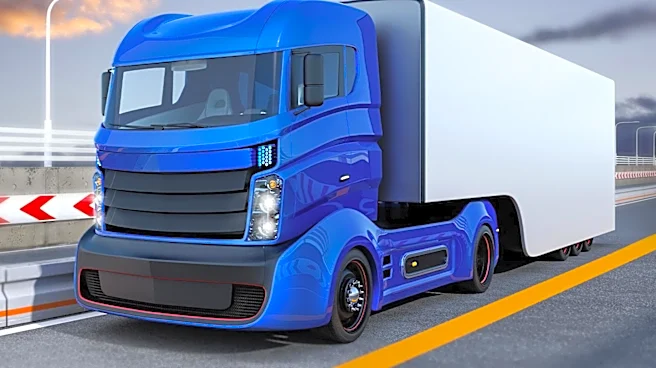
Einride AB has announced a strategic collaboration with NVIDIA Corporation to accelerate the development and deployment of its autonomous heavy-duty trucks. Einride will integrate its next-generation autonomous-driving system, the Einride Driver, onto
NVIDIA’s DRIVE Hyperion platform. This partnership aims to adapt NVIDIA’s compute, sensor, software, and safety architecture specifically for heavy-duty freight operations, supporting Einride’s expansion into highway and suburban autonomous trucking. Einride, which currently operates hundreds of electric trucks in the U.S., Europe, and the Middle East, plans to expand its fleet to between 1,500 and 2,000 vehicles by 2028. The company estimates that approximately 80% of the demand on its platform could be suitable for automation in the medium term. Einride develops its autonomous-driving system in-house, covering safety validation, regulatory approvals, and customer deployments, while NVIDIA provides the foundational computing platform and AI development tools. Einride will also leverage NVIDIA Blackwell infrastructure through an NVIDIA Exemplar Cloud partner for training and testing its autonomous-driving models and use NVIDIA Cosmos to identify challenging driving scenarios and generate synthetic training data, enhancing the diversity of data for autonomous vehicle validation.
Why It's Important?
This collaboration is significant for the U.S. transportation and logistics industries, as it promises to accelerate the adoption of autonomous heavy-duty trucks. The deployment of self-driving trucks on highways and suburban routes could lead to increased efficiency, reduced operational costs, and potentially address driver shortages in the trucking sector. For Einride, this partnership with NVIDIA, a leader in AI and computing, provides access to advanced technology crucial for scaling its autonomous operations and meeting its ambitious fleet expansion goals. For NVIDIA, it further solidifies its position as a key enabler of AI and autonomous technology across various industries, extending its influence beyond traditional computing into the rapidly evolving logistics market. The development of more robust and validated autonomous systems could also improve road safety by reducing human error. However, the widespread adoption of such technology will likely raise questions about job displacement for truck drivers and necessitate new regulatory frameworks for autonomous vehicle operation, impacting labor unions and government agencies.
What's Next?
Einride will proceed with building its autonomous-driving system on NVIDIA’s DRIVE Hyperion platform, adapting the technology for heavy-duty freight. This will involve extensive training and testing of autonomous-driving models using NVIDIA Blackwell infrastructure and NVIDIA Cosmos for synthetic data generation. The company aims to scale its autonomous deployments across its existing freight network, with a target of 1,500 to 2,000 vehicles by 2028. Regulatory bodies will likely continue to monitor and develop guidelines for the safe operation of Level 4 autonomous trucks on public roads. Further advancements in sensor technology, AI algorithms, and real-world testing will be critical. The success of this partnership could encourage other logistics companies to invest more heavily in autonomous solutions, potentially leading to a more rapid transformation of the trucking industry. The market will also be watching for Einride's progress in achieving its fleet expansion targets and the impact on its financial performance.
Beyond the Headlines
The partnership between Einride and NVIDIA highlights a broader trend of increasing integration between AI and physical industries. The move towards autonomous heavy-duty trucks represents a significant step in the automation of logistics, which could have profound societal and economic implications. Beyond efficiency gains, the ethical considerations of AI-driven decision-making in complex driving scenarios, particularly concerning safety and liability, will become more prominent. The development of synthetic training data using tools like NVIDIA Cosmos also raises questions about the reliability and robustness of AI models trained on simulated environments versus real-world data. Furthermore, the shift to autonomous trucking could reshape the labor market, requiring new skills and potentially leading to job retraining programs for displaced workers. The environmental impact of electric autonomous trucks, combining reduced emissions with optimized routes, could also contribute to sustainability goals, but the energy demands of the underlying AI infrastructure will need to be considered.