
What's Happening?
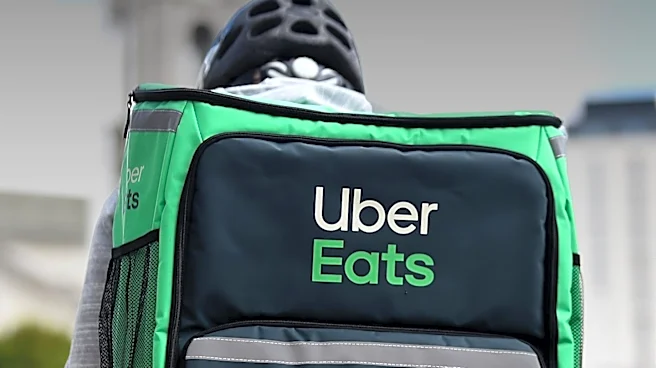
Subway has initiated a drone delivery pilot program in the Houston area, partnering with Uber Eats and Zipline. This new service allows customers in select locations to order Subway sandwiches through
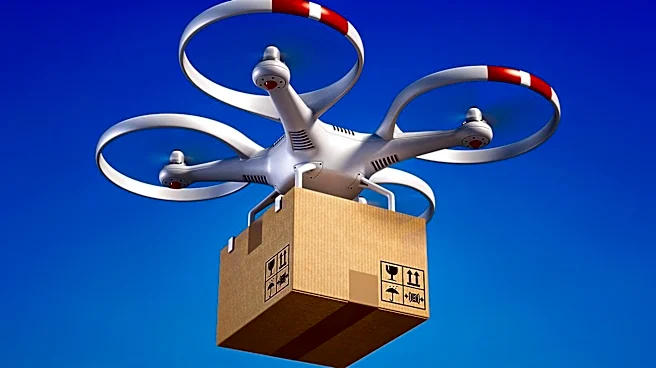
the Uber Eats app, with drones delivering the food. The drones maintain an altitude of over 300 feet above the ground and lower the order using a delivery pod. This initiative, which began in November in Spring, Texas, marks Subway as one of Uber Eats' initial restaurant partners to implement this drone delivery technology. Damien Harmon, North America President of Subway, stated that the program aims to provide convenient delivery options for guests and ensure they receive their meals fresh and as ordered.
Why It's Important?
This drone delivery pilot program signifies a notable advancement in the food service industry's approach to last-mile delivery in the U.S. For Subway, it represents an effort to enhance customer convenience and explore innovative delivery methods, potentially expanding its reach and service efficiency. For Uber Eats, integrating drone delivery with a major fast-food chain like Subway could set a precedent for broader adoption of this technology across its platform, impacting the competitive landscape of food delivery services. The success of this pilot could influence other restaurant chains to invest in similar technologies, potentially leading to faster delivery times and reduced operational costs in the long run. This could also create new opportunities for technology providers like Zipline in the logistics sector.
What's Next?
The pilot program's performance in the Houston area will likely be closely monitored by Subway, Uber Eats, and the broader food delivery industry. If successful, it could lead to an expansion of drone delivery services to more locations across the U.S., potentially transforming how consumers receive their food orders. Further technological advancements in drone capabilities, regulatory adjustments, and public acceptance will play crucial roles in determining the scalability and future of this delivery method. Subway and Uber Eats will likely evaluate customer satisfaction, delivery efficiency, and cost-effectiveness to inform future decisions regarding the program's expansion and integration into their standard operations.
Beyond the Headlines
The introduction of drone delivery by a major food chain like Subway raises broader implications beyond immediate convenience. It highlights the increasing automation in service industries and the potential for significant shifts in labor markets, particularly for traditional delivery drivers. Ethical considerations regarding drone privacy, noise pollution, and air traffic management will become more prominent as these services expand. Furthermore, the regulatory framework for commercial drone operations in urban areas will need to evolve to accommodate such innovations, balancing technological progress with public safety and community concerns. This pilot could be a precursor to a more automated and technologically driven future for various consumer services.