



What's Happening?
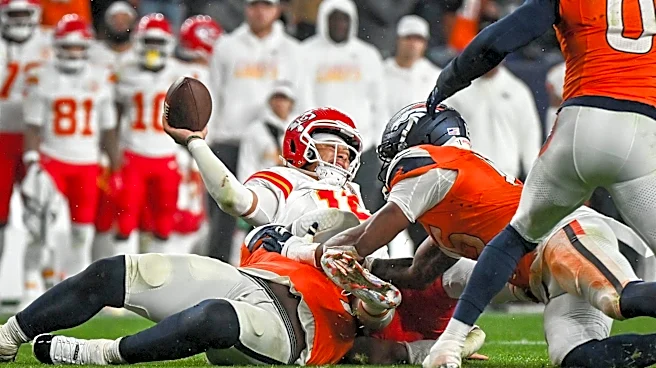
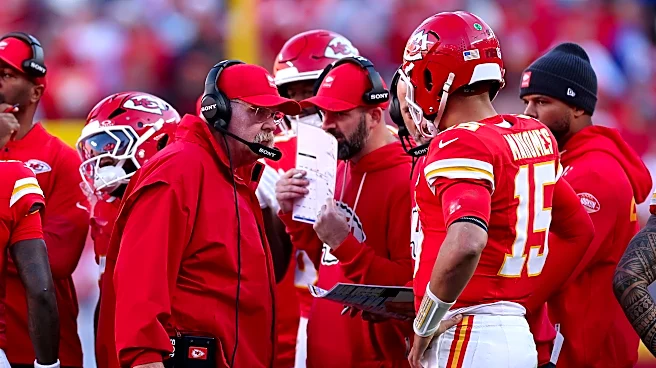
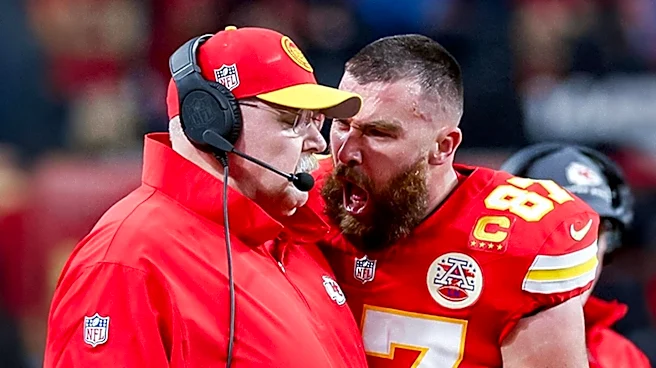
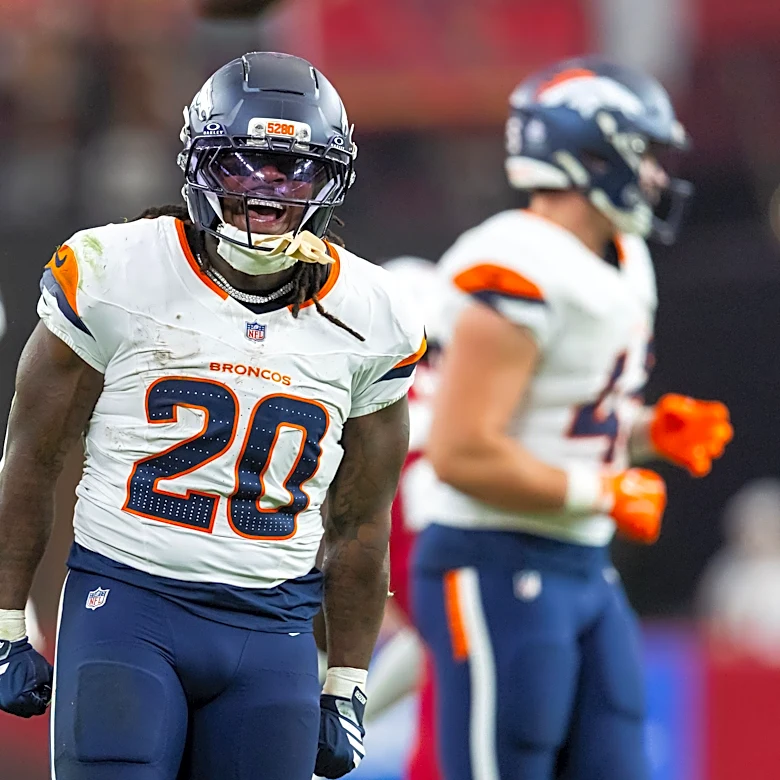
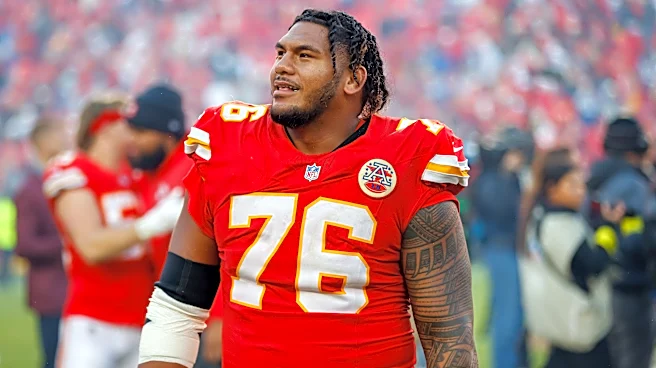
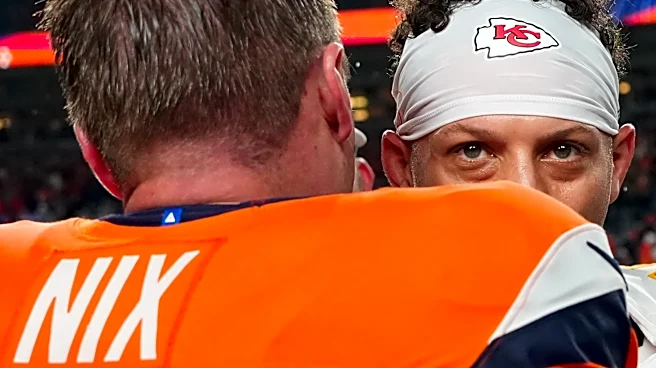
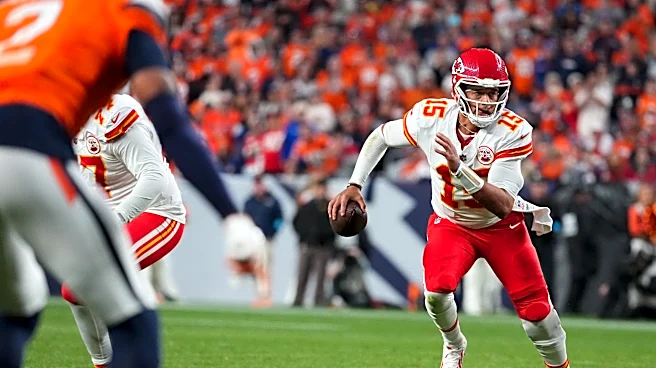
Kansas City Chiefs tight end Travis Kelce has publicly disagreed with quarterback Patrick Mahomes and head coach Andy Reid regarding a controversial false start penalty that occurred during the team's recent loss to the Denver Broncos. The penalty, called
in the closing seconds of the game, negated a potential go-ahead touchdown drive. While Mahomes and Reid expressed frustration with the call, suggesting officials often 'swallow the whistle' in such critical moments, Kelce stated on his 'New Heights' podcast that he agreed with the officials' decision. He acknowledged that the player in question did flinch, confirming it was a legitimate penalty. Despite the setback, Kelce emphasized that the Chiefs still had an opportunity to score after the penalty but failed to execute, ultimately leading to a sack on Mahomes and a loss.
Why It's Important?
This public disagreement among key players on the Kansas City Chiefs highlights differing perspectives on game-altering officiating decisions within a professional sports team. While it might seem like a minor internal matter, it can reflect on team unity and how players process adversity. Mahomes' and Reid's comments suggested a frustration with officiating standards in high-pressure situations, a common sentiment among players and coaches. Kelce's stance, however, indicates a willingness to acknowledge team errors, even when it means disagreeing with his quarterback. This could be seen as a sign of accountability within the team, or it could potentially create subtle rifts if not managed effectively. For fans and analysts, it offers a rare glimpse into the internal dynamics and differing interpretations of game rules among elite athletes.
What's Next?
The immediate aftermath of Kelce's comments will likely involve media discussions and fan reactions, dissecting the implications of his disagreement with Mahomes. While it's unlikely to cause significant long-term issues for the Chiefs, it could lead to further questions for both Kelce and Mahomes in upcoming press conferences about their differing views on the play and team accountability. The team will need to move past this incident quickly as they continue their season, focusing on future games and execution. Coaches may use this as a teaching moment to reinforce discipline and focus, ensuring that such penalties are avoided in critical situations moving forward. The broader conversation around officiating consistency in the NFL may also resurface.
Beyond the Headlines
This incident touches upon the broader theme of player accountability versus external blame in professional sports. While it's common for teams to rally against perceived unfair officiating, Kelce's willingness to validate the call suggests a deeper commitment to self-assessment. This approach, if adopted widely, could foster a culture of internal responsibility rather than externalizing blame. It also highlights the pressure on officials in high-stakes games, where every call is scrutinized. The differing opinions within the Chiefs organization could spark discussions about how teams internally review and learn from critical game moments, and whether a unified front, even in disagreement, is always the most effective strategy for team morale and performance.