






What's Happening?
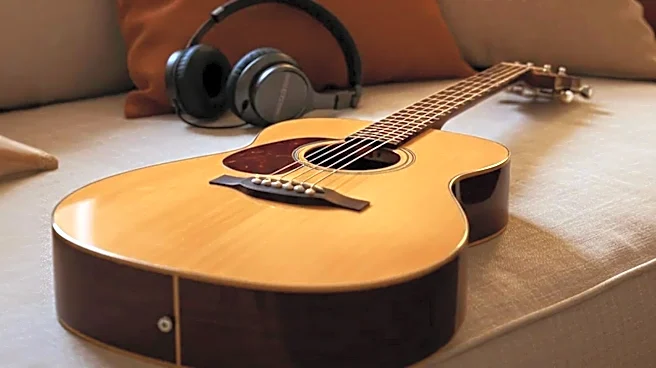
Donner has introduced the HUSH-I-PRO Electro-Acoustic Headphone Practice guitar, designed for musicians seeking a portable and quiet practice solution. This instrument features an acoustic-oriented piezo and modeling path, along with an onboard output
for wired headphones, allowing for direct wired listening. The HUSH-I-PRO is characterized by its headless format, removable frames, a 24.75-inch scale, and 20 frets. It includes a 3.5 mm powered headphone output and a 6.35 mm output for a separate instrument connection. The device requires a rechargeable battery for its electronic functions. Bluetooth functionality is included for backing-track input, not for wireless monitoring of the guitar's output. This model aims to provide an acoustic-oriented alternative for headphone monitoring directly from the instrument, distinguishing it from traditional electric guitars that rely on external amplifiers or listening devices.
Why It's Important?
The introduction of the Donner HUSH-I-PRO addresses a growing demand in the music industry for versatile and portable practice instruments, particularly for urban dwellers or those with limited space and a need for quiet practice. This product caters to a niche market of musicians who prioritize silent practice without sacrificing the feel of an acoustic-electric guitar. Its design, which includes a headless format and removable frames, enhances portability, making it suitable for travel or small living environments. The integrated headphone output simplifies the practice setup, eliminating the need for external amplification for personal monitoring. This could influence market trends towards more compact and integrated musical instruments, potentially impacting sales of traditional acoustic and electric guitars, as well as associated amplification equipment.
What's Next?
The Donner HUSH-I-PRO is part of a broader trend in musical instrument manufacturing focusing on convenience and technology integration. Future developments may include enhanced battery life, more advanced digital signal processing for varied acoustic modeling, and potentially wireless headphone integration for monitoring. The success of this model could encourage other manufacturers to develop similar 'silent practice' or 'travel' instruments, leading to increased competition and innovation in this segment. Retailers will likely adapt their marketing strategies to highlight the portability and quiet practice capabilities of such instruments. Consumer feedback on the HUSH-I-PRO's performance, sound quality, and battery life will be crucial in shaping subsequent iterations and influencing the direction of the portable instrument market.
Beyond the Headlines
The emergence of instruments like the Donner HUSH-I-PRO reflects a shift in how musicians interact with their craft, moving towards more individualized and less intrusive practice methods. This trend has implications for music education, allowing students to practice more frequently without disturbing others. It also supports the lifestyle of touring musicians or those with demanding schedules, enabling practice in diverse environments. Ethically, the focus on silent practice could foster a more inclusive musical community by reducing noise pollution in shared living spaces. Legally, intellectual property surrounding integrated technologies and design patents for headless and collapsible instruments may become more prominent. Culturally, these instruments could redefine the perception of a 'practice space,' moving it from a dedicated room to virtually any location, thereby democratizing access to musical development.