






What's Happening?
The Boston Celtics' 'Big 3' era, initiated in 2007 with the acquisition of Kevin Garnett, Ray Allen, and Paul Pierce, significantly altered the NBA's team-building strategies. This trio led the Celtics to a 66-16 regular season record and an NBA Finals
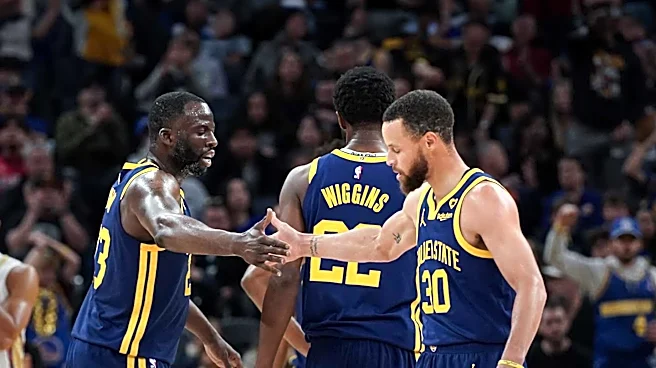
victory in 2007-08. Their success demonstrated that a team could thrive with three superstar players, challenging the traditional 'Batman and Robin' duo model. The Celtics' approach inspired other teams to form their own 'Big 3', such as the Miami Heat with LeBron James, Chris Bosh, and Dwyane Wade, and the Golden State Warriors with Steph Curry, Draymond Green, and Klay Thompson. This shift in team dynamics has had a lasting impact on the league, influencing how teams are constructed and how player movement is perceived.
Why It's Important?
The Celtics' 'Big 3' model has had a profound impact on the NBA, encouraging teams to pursue multiple superstar players to remain competitive. This approach has led to increased player movement and empowerment, as players seek to join forces with other top talents. The model also influenced the financial strategies of teams, as managing the salaries of multiple star players became a critical aspect of team management. The Celtics' success with this model has set a precedent that continues to shape team-building strategies in the NBA, affecting how teams allocate resources and negotiate player contracts.