



What's Happening?
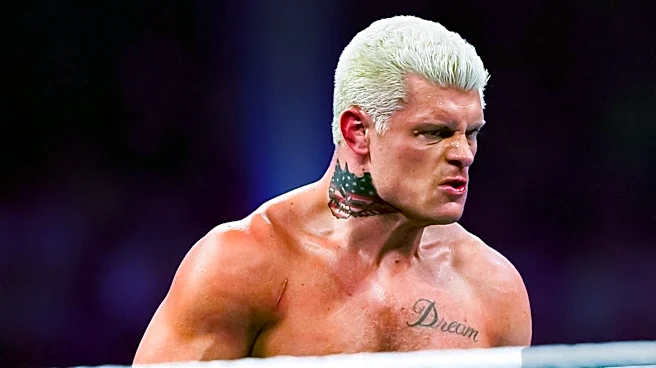
AJ Styles has revealed that he received backstage 'heat' for suggesting the controversial 'Burning Hammer' maneuver during his 2024 feud with Cody Rhodes at Backlash France. Fans had previously believed that Cody Rhodes independently decided to 'fire
up' after taking the devastating move. However, Styles clarified in an interview with Cody Rhodes on 'What Do You Wanna Talk About?' that he was the one who proposed the spot. Styles explained that he felt their match needed a significant moment and believed the 'Burning Hammer' would provide it. He acknowledged that while it is a powerful move, he differentiated his execution from Kenta Kobashi's original, stating, 'it’s AJ Styles’ Burning Hammer, so it’s not Kenta Kobashi’s Burning Hammer. It’s way different.' Cody Rhodes confirmed Styles' account, noting that he often joked about it not being one of Styles' established finishers, but appreciated Styles' commitment to developing their matches.
Why It's Important?
This revelation offers insight into the creative processes and potential internal dynamics within professional wrestling organizations. The concept of 'backstage heat' highlights the unwritten rules and expectations that can influence wrestlers' decisions and interactions. For fans, understanding that such a debated moment was a deliberate creative choice by one of the performers, rather than an impromptu action, can alter their perception of the match and the storytelling involved. It underscores the collaborative yet sometimes contentious nature of crafting high-impact wrestling sequences. The incident also showcases AJ Styles' willingness to take creative risks to elevate a match, even if it means facing internal scrutiny, and Cody Rhodes' appreciation for such a challenging approach, which speaks to their professional relationship and dedication to their craft.
What's Next?
While the immediate 'heat' for AJ Styles has likely subsided given the time elapsed since Backlash France, this disclosure could influence future creative decisions within the wrestling promotion. It might lead to more open discussions about the use of high-risk maneuvers and their perceived impact versus the potential for internal backlash. For both Styles and Rhodes, this shared experience could further solidify their professional bond, as Rhodes publicly acknowledged Styles' innovative approach. Fans might also pay closer attention to the origins of controversial spots in future matches, prompting more transparency or discussion from performers about their creative choices. The incident serves as a case study in the delicate balance between pushing creative boundaries and adhering to established norms within the wrestling industry.
Beyond the Headlines
The 'Burning Hammer' incident transcends a simple wrestling move; it touches upon the broader themes of artistic integrity, creative control, and the unwritten codes of conduct in performance-based industries. In professional wrestling, where the line between sport and entertainment is constantly blurred, the decision to use a move like the 'Burning Hammer'—known for its perceived danger and rarity—carries significant weight. The 'backstage heat' received by Styles suggests an internal hierarchy or a set of unspoken rules regarding the deployment of such impactful maneuvers, possibly to protect the integrity of certain moves or to manage perceived risks. This situation highlights the constant negotiation between performers, writers, and management to deliver compelling narratives while maintaining safety and adhering to established traditions, revealing the complex ecosystem behind televised sports entertainment.