







What's Happening?
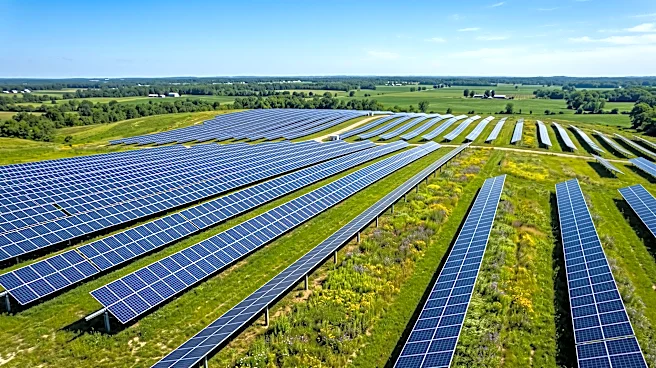
Entergy Arkansas has filed a petition with the Public Service Commission (PSC) requesting a reconsideration of its decision to deny a 20-year power purchase agreement for the Big Island Solar project. The project, a 440-megawatt solar facility being developed
by Pattern Energy on 3,200 acres in Mississippi County near Wilson, has an operational target date of 2028. The PSC initially denied Entergy's application in September, citing concerns that the agreement's cost was not reasonable, it would not provide savings for retail customers compared to other generation options, and it was not necessary to meet the utility's generation needs. Entergy argues that the agreement will help meet the capacity and energy needs of all its customers and assist Google in fulfilling its contract commitments. The utility has a 20-year special rate contract to power Google's $4 billion West Memphis data center. In its rehearing petition, Entergy included a definitive agreement with Google regarding the purchase of renewable energy credits, addressing a key concern raised by the commission.
Why It's Important?
This development is significant for Arkansas's energy landscape and the broader push for renewable energy. The Big Island Solar project represents a substantial investment in solar power infrastructure, and its approval would contribute to the state's renewable energy capacity. For Entergy Arkansas, securing this agreement is crucial for meeting future energy demands and potentially stabilizing costs for its customers, especially given Google's commitment to cover the full cost of the power purchase agreement. Google's involvement underscores the growing corporate demand for clean energy and its role in driving renewable energy projects. The resolution of the renewable energy credit issue, with Google now financially supporting the agreement, could set a precedent for how large corporations partner with utilities to achieve sustainability goals while potentially benefiting other customers by offsetting costs. The PSC's final decision will influence the pace of renewable energy development and the financial structure of such projects in Arkansas.
What's Next?
Entergy is requesting that the Public Service Commission issue a rehearing, reversal, and a finding that the power purchase agreement is in the public interest by no later than October 22. The PSC will review Entergy's petition and the newly submitted definitive agreement with Google. This agreement clarifies that Google will provide full cost support for the power purchase agreement, including the agreement price, an additional sum, and administrative fees. In return, Google will receive the energy and capacity revenues from the Midcontinent Independent System Operator markets attributable to the power purchase agreement as bill offsets, as well as the renewable energy credits it produces. The commission's decision will determine the future of the Big Island Solar project and its impact on Entergy Arkansas's energy portfolio and customer rates. If approved, the project will move forward with its 2028 operational target.
Beyond the Headlines
The ongoing discussions between Entergy Arkansas, Google, and the Public Service Commission highlight the complex interplay between utility regulation, corporate sustainability goals, and the development of renewable energy infrastructure. The initial denial by the PSC, based on cost and customer benefit concerns, reflects the regulatory body's role in protecting consumer interests. However, Google's subsequent agreement to cover the full cost of the power purchase agreement demonstrates how large energy consumers can directly influence the economic viability of renewable projects. This model, where a major corporation underwrites the costs of a renewable energy facility in exchange for its output and environmental attributes, could become a more common pathway for financing large-scale clean energy projects. It also raises questions about the equitable distribution of benefits and costs among different customer segments and the evolving role of renewable energy credits in corporate environmental strategies.