





What's Happening?
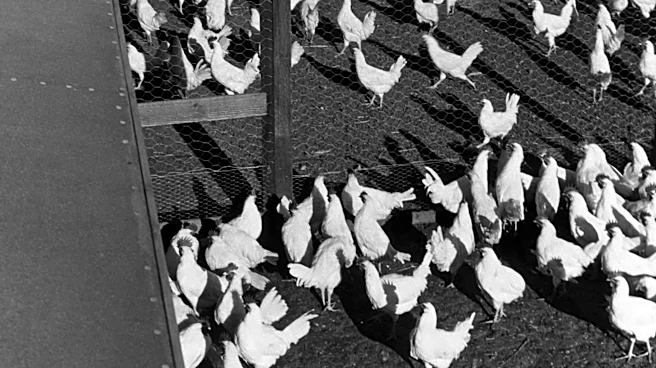
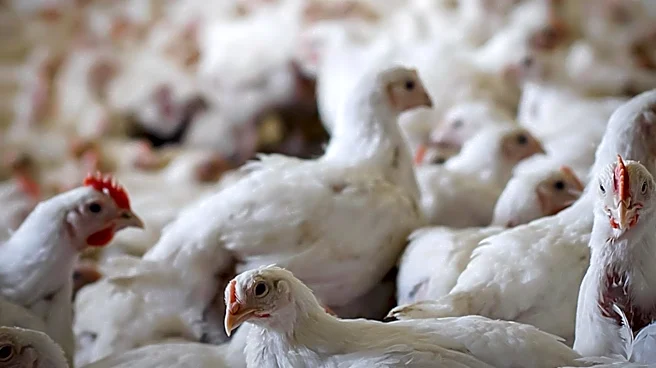
Egg farms are under increasing scrutiny for their environmental footprint, which includes significant contributions to greenhouse gas emissions, water usage, and land degradation. According to Eggs Unlimited, methane emissions from manure management,
substantial energy consumption for facility operations, and land conversion for poultry housing and grain production are key contributors to greenhouse gases. Egg production is also water-intensive, requiring water for chicken consumption, feed processing, and facility cleaning. Furthermore, poultry farming can lead to deforestation and monoculture practices, impacting biodiversity and soil quality. Businesses are being urged to consider these factors when sourcing eggs and to prioritize farms that implement sustainable practices to mitigate adverse environmental effects.
Why It's Important?
The environmental impact of egg farming has significant implications for U.S. industries, public policy, and consumers. As awareness of climate change and environmental sustainability grows, businesses that fail to adopt or source from sustainable practices risk reputational damage and potential regulatory pressures. Consumers are increasingly demanding ethically and sustainably produced food, influencing market trends and procurement choices. The shift towards sustainable practices, such as cage-free systems, improved waste management, and energy efficiency, can lead to healthier ecosystems, reduced resource depletion, and a more resilient food supply chain. Companies that embrace these changes stand to gain a competitive advantage and align with evolving consumer values, while those that do not may face economic and social repercussions.
What's Next?
The industry is moving towards greater adoption of sustainable practices in egg farming. This includes transitioning to cage-free and free-range systems, which offer environmental benefits like reduced antibiotic use and improved animal welfare. Innovations in waste management, such as composting manure and biogas production, are being implemented to reduce methane emissions and create renewable energy. Additionally, egg farms are increasingly adopting energy-efficient technologies like solar panels and enhanced insulation to decrease energy consumption. Businesses are encouraged to partner with suppliers who prioritize these sustainable methods to meet corporate responsibility goals and enhance their market positioning. Continued research and development into more sustainable farming techniques are also anticipated.
Beyond the Headlines
The push for sustainable egg farming extends beyond immediate environmental benefits, touching upon broader ethical and economic considerations. The move towards cage-free and free-range systems reflects a growing societal concern for animal welfare, which is becoming a significant factor in consumer purchasing decisions. This shift can also influence labor practices within the agricultural sector, potentially leading to changes in farm management and worker conditions. Economically, investing in sustainable infrastructure and practices, while initially costly, can lead to long-term savings through reduced resource consumption and increased market access. The integration of renewable energy sources and advanced waste management techniques could also foster technological innovation within the agricultural sector, creating new business opportunities and contributing to a circular economy.