





What's Happening?
Industrial Monitor Direct has published an article detailing the complexities and critical considerations when attempting to join API 5L X70 pipe with ASTM A105N weld neck flanges, particularly when both components have an equal wall thickness of 0.81
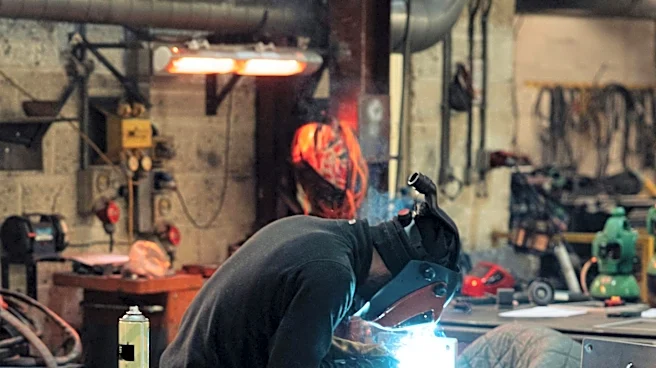
inches. The core issue highlighted is that matching thickness alone does not guarantee the flange hub can withstand the pipeline's design pressure due to the significant difference in material strength. The X70 pipe has a specified minimum yield strength of 70 ksi, while the A105N flange has a specified minimum yield strength of 36 ksi. The article outlines seven crucial checks, including verifying design basis, material strength, hub thickness, flange pressure rating, material matching requirements, welding qualification, and hydrotest procedures. It emphasizes that a stronger filler metal cannot compensate for a weaker flange hub, and a successful hydrotest does not replace a proper design calculation.
Why It's Important?
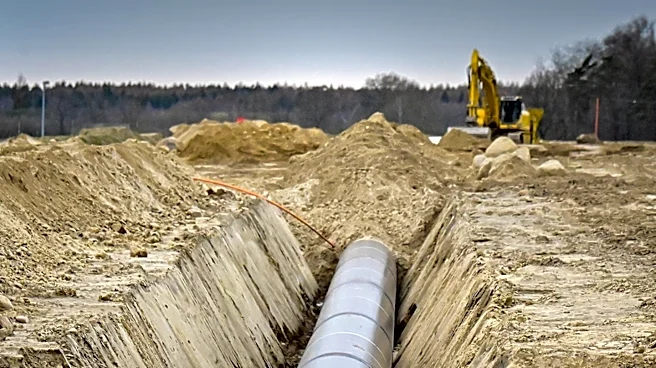
This technical guidance is crucial for industries involved in pipeline construction and maintenance, particularly in the oil and gas sectors where high-pressure pipelines are common. Misunderstanding the strength disparities between materials like X70 pipe and A105N flanges can lead to catastrophic failures, posing significant safety risks, environmental hazards, and substantial financial losses. The article's detailed checks provide a framework for engineers and fabricators to ensure the integrity of pipeline connections, preventing potential leaks, ruptures, and operational disruptions. Adhering to these guidelines helps maintain compliance with industry standards such as ASME B16.5, ASME B16.47, and MSS-SP-44, thereby safeguarding infrastructure and operational continuity. The emphasis on proper design and qualification over mere visual inspection or hydrotest results underscores the importance of engineering rigor in critical applications.
What's Next?
Companies and engineering teams involved in pipeline projects will need to review their current practices for joining dissimilar strength materials. The article suggests that if an A105N hub fails its calculation for X70 pipe, the existing connection is underdesigned, necessitating either replacement of the flange or a redesign of the hub and transition arrangement. Furthermore, welding procedures must be re-evaluated and qualified to ensure they cover the specific base materials, thicknesses, and joint configurations. Project managers and procurement teams will need to ensure that replacement flanges, such as those made from ASTM A694 F70, meet the required strength and geometric specifications. Ongoing training and adherence to updated engineering standards will be critical to prevent future design deficiencies and ensure the long-term reliability of pipeline infrastructure.
Beyond the Headlines
The detailed technical discussion in the article points to a broader challenge within industrial engineering: the reliance on simplified assumptions rather than comprehensive design verification. The notion that 'equal thickness' implies 'equal strength' is a common misconception that can have severe consequences in high-stress applications. This highlights the ethical responsibility of engineers to conduct thorough analyses and not to implicitly trust material certificates without understanding their implications for design. The article also implicitly touches upon the legal ramifications of structural failures, where inadequate design or fabrication can lead to liability issues. Culturally, it reinforces the importance of a 'safety-first' mindset in industrial operations, where meticulous attention to detail and adherence to established engineering principles are paramount to preventing accidents and ensuring public and environmental safety.