






What's Happening?
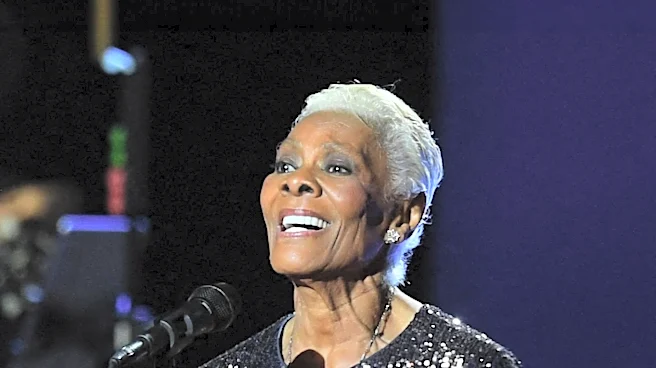
A long-standing feud between music icons Dionne Warwick and Aretha Franklin, which spanned decades, has been brought to light. The rivalry reportedly began in the 1960s when Franklin released her version of Warwick's song 'I Say a Little Prayer,' even
recruiting Warwick's aunt, Cissy Houston, for backup vocals. The competition intensified in 1982 when both artists signed with Clive Davis at Arista Records. In 1983, Davis signed Whitney Houston, Warwick's first cousin, to the label, leading Franklin to make remarks about Houston's artistic immaturity despite their collaboration on a duet. The animosity resurfaced publicly at Whitney Houston's funeral, where Warwick made a comment implying Franklin's presence and maternal affection for Houston. Franklin later refuted this, telling the Associated Press that Warwick 'blatantly lied on me…fully well knowing what she was doing,' suggesting Warwick created a false narrative.
Why It's Important?
This detailed account of the feud between two legendary American vocalists highlights the intense competitive landscape within the music industry, particularly among artists of similar stature and era. The rivalry between Warwick and Franklin, both powerful and distinct artists who rose to fame in the 1960s, underscores how personal relationships and professional competition can intertwine and escalate over time. The involvement of Whitney Houston, a younger artist and family member, further complicates the narrative, illustrating the pressures and dynamics within musical dynasties. Such feuds, while often fueled by media attention, can impact public perception of artists, influence career trajectories, and even shape the historical narrative of popular music. It also sheds light on the personal toll that public scrutiny and professional rivalries can take on individuals in the entertainment industry.
What's Next?
While both Aretha Franklin and Whitney Houston have passed away, the recounting of this feud serves as a historical record within music journalism. There are no immediate 'next steps' in terms of resolution or further conflict between the primary figures. However, such historical narratives continue to be discussed and analyzed by music critics, biographers, and fans, potentially influencing how the legacies of these artists are interpreted. The story may also prompt further discussions about the role of media in amplifying or even instigating celebrity feuds, and how artists navigate personal and professional boundaries in the public eye. Future documentaries, biographies, or retrospective analyses of their careers might delve deeper into these personal dynamics, offering new perspectives on their impact on American music.
Beyond the Headlines
The feud between Dionne Warwick and Aretha Franklin transcends a simple rivalry, touching upon deeper themes of artistic ownership, family dynamics, and the pressures faced by Black female artists in the American music industry. The initial conflict over a song cover and the subsequent signing to the same record label, coupled with the introduction of a younger, related talent in Whitney Houston, illustrates the complex web of relationships and competition. This narrative also subtly highlights the challenges of maintaining personal integrity and managing public image in an industry that often thrives on drama. The public nature of their disagreements, particularly at a somber event like a funeral, underscores the difficulty of separating personal feelings from public persona for celebrities. It also offers a glimpse into the internal politics and power struggles that can exist even among highly successful and respected artists.