




What's Happening?
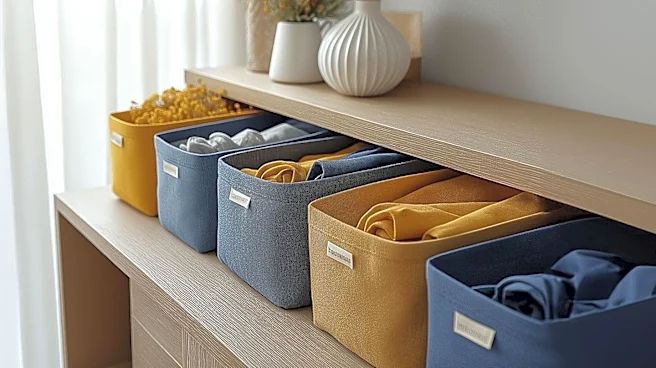
Interior designers are sharing innovative strategies to enhance storage and create the illusion of larger spaces in small homes. Kara Childress, a Texas designer, emphasizes the importance of 'hidden storage' to tuck away smaller items, allowing larger pieces
to take focus and bringing more character into a home without sacrificing valuable square footage. Kelly Emerson of Aidan Design highlights built-in cabinetry as a way to add dimension and architectural charm, making rooms feel grander and appearing larger by drawing the eye upwards. Jennifer Hunter, a New York-based designer, utilizes open shelving, painting built-ins the same color as walls to emphasize tall ceilings and open layouts. Cathleen Gruver of Gruver Cooley advocates for 'storage that disappears,' such as window seats with lift-top storage, which create a clean visual plane that makes a space feel more expansive even if the actual square footage remains unchanged. These approaches prioritize functionality and aesthetics to optimize living areas.
Why It's Important?
These design philosophies are crucial for urban dwellers and those in smaller living spaces across the U.S., where square footage is often at a premium. By implementing clever storage solutions and design tricks, homeowners and renters can significantly improve their quality of life, making compact environments feel more comfortable and less cluttered. The emphasis on multi-functional furniture and integrated storage systems addresses the practical challenges of limited space, allowing for better organization and a more serene home environment. This trend also impacts the furniture and home goods industries, driving demand for innovative, space-saving products. For real estate, well-designed small spaces can increase appeal and value, as efficient use of space becomes a key selling point. Ultimately, these strategies empower individuals to create functional and aesthetically pleasing homes regardless of their size, fostering a sense of well-being and order.
What's Next?
The continued demand for efficient living solutions is likely to drive further innovation in furniture design and architectural integration. We can expect to see more manufacturers offering modular and customizable storage systems, as well as furniture pieces that serve multiple purposes. Interior designers will continue to refine these techniques, potentially incorporating smart home technology to further optimize space and functionality. Educational resources and DIY guides on maximizing small spaces will also likely proliferate, empowering more individuals to implement these changes themselves. Additionally, as urban populations grow, the principles of maximizing small spaces may influence future residential building designs, leading to more thoughtfully planned compact homes and apartments that prioritize both utility and aesthetic appeal. The focus will remain on creating versatile and adaptable living environments.
Beyond the Headlines
Beyond the immediate benefits of decluttering and aesthetic improvement, the emphasis on maximizing small spaces reflects a broader cultural shift towards minimalism and conscious consumption. In an era of increasing environmental awareness, optimizing existing spaces rather than constantly seeking larger homes aligns with sustainable living principles. This approach encourages individuals to be more intentional about their possessions, fostering a 'less is more' mindset. Psychologically, a well-organized and uncluttered environment can reduce stress and improve mental clarity, contributing to overall well-being. The integration of storage into architectural elements also blurs the lines between furniture and structure, suggesting a more holistic approach to interior design where every element serves a purpose. This trend could lead to a re-evaluation of traditional home layouts, promoting adaptable and multi-functional spaces that cater to diverse lifestyles and evolving needs.