




What's Happening?
STMicroelectronics (NYSE: STM), a global semiconductor company, anticipates a significant surge in its AI data-center revenue, projecting it to surpass $1 billion in 2026 and exceed $2 billion in 2027. This growth is primarily driven by demand for connectivity
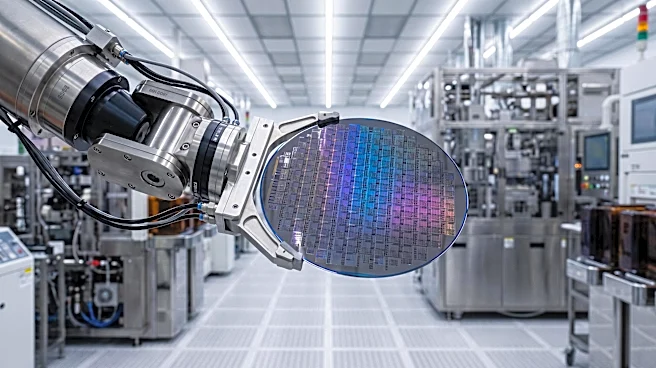
products, including silicon photonics, microcontrollers, and BiCMOS chips, which are expected to account for approximately 80% of next year's data-center billings. Lorenzo Grandi, CFO of STMicroelectronics, stated at a Citi technology event that the company continues to experience strong bookings, lean inventory, and improved demand visibility across its end markets, with particular strength noted in artificial intelligence infrastructure, automotive, and industrial applications. The company's book-to-bill ratio remains 'well above 1x' across its served markets. While power-related revenue in AI infrastructure is a more long-term opportunity, becoming meaningful after 2028, near-term growth will be predominantly fueled by connectivity solutions. STMicroelectronics is also investing in its 300-millimeter manufacturing infrastructure to meet this increasing demand, with investments supporting silicon photonics also adaptable for other technologies like microcontrollers.
Why It's Important?
This projection from STMicroelectronics highlights the escalating demand for specialized semiconductor components crucial for AI infrastructure, signaling a robust growth trajectory for the AI sector. The company's focus on connectivity products like silicon photonics underscores the critical role of high-speed data transfer and processing in advanced AI data centers. This trend is vital for the U.S. technology industry, as it indicates continued investment and innovation in AI capabilities, which are foundational for various sectors, including cloud computing, autonomous systems, and advanced analytics. The strong bookings and lean inventory reported by STMicroelectronics suggest a healthy demand environment for semiconductors, which can positively impact the broader U.S. economy by driving technological advancements and creating opportunities for related industries. Furthermore, the company's strategic investments in manufacturing capacity reflect a commitment to meeting future demand, which could help stabilize supply chains for critical AI components and reduce reliance on single-source suppliers, benefiting U.S. tech companies that depend on these chips.
What's Next?
STMicroelectronics plans to continue investing in its 300-millimeter manufacturing infrastructure to expand capacity and meet the growing demand for AI-related components. The company expects to achieve significant gross-margin improvements, exceeding 400 basis points, from the closure of two older 200-millimeter factories and two 150-millimeter silicon-carbide fabs. The main benefits from these closures are anticipated to materialize in late 2027 or early 2028, contingent on customer qualification timelines for products transferred to newer fabs. In the interim, STMicroelectronics expects incremental margin improvements as underloading charges and duplication costs decrease, manufacturing efficiency improves, and the product mix shifts towards higher-margin offerings like silicon photonics. The company is also pursuing price increases to offset higher input costs, aiming for overall pricing to remain broadly flat to slightly higher, a departure from typical semiconductor sector trends. Additionally, STMicroelectronics anticipates its Power & Discrete business to return to profitability around late next year or early 2028, aided by 200-millimeter production transitions.
Beyond the Headlines
The anticipated surge in AI data-center revenue for STMicroelectronics reflects a broader industry shift towards more specialized and high-performance computing, driven by the increasing complexity and scale of AI applications. This trend has significant implications for the global semiconductor landscape, potentially leading to increased competition and innovation in areas like silicon photonics and advanced microcontrollers. The company's strategy of adapting its manufacturing infrastructure for multiple technologies, such as silicon photonics and microcontrollers, highlights a flexible approach to production that can mitigate risks associated with fluctuating demand for specific products. Furthermore, the emphasis on long-term agreements with customers, some including cash advances, indicates a strategic move to secure capacity, volumes, and pricing, fostering greater stability in the supply chain. This could set a precedent for how semiconductor manufacturers and their clients collaborate in an era of high demand and technological rapid evolution, potentially influencing contractual norms and investment strategies across the industry.