






What's Happening?
CityGreens, an agritech company, has released the results of its third aeroponic trial, which it deems commercially viable. The trial was conducted at the company's AgriTech Park in India. Ravi, CityGreens' Chief Agronomist with 35 years of experience
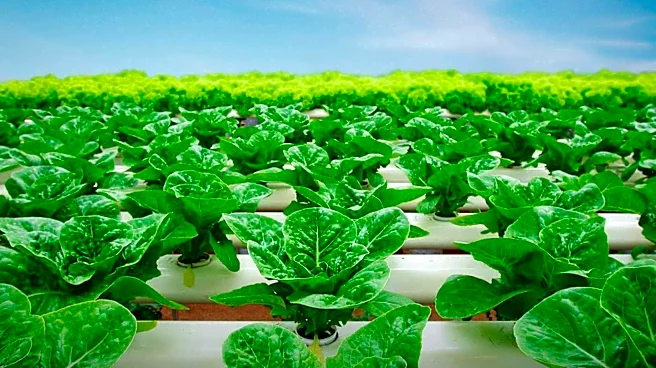
in agriculture and 12 in hydroponics, detailed the full crop cycle of leafy greens in a video. The trial demonstrated that aeroponics can reduce the harvest time for leafy greens by five to seven days compared to conventional hydroponics, with plants occupying the system for only 20 to 25 days. This efficiency allows for more crop cycles annually on the same infrastructure, potentially increasing revenue by 11% to 25% without additional fixed costs. Ravi attributes the success of aeroponics to the direct exposure of roots to air and a nutrient mist, which eliminates oxygen limitations common in water-based systems. He also advises new growers to bypass traditional hydroponic methods like Nutrient Film Technique (NFT) or Deep Water Culture (DWC) and start directly with aeroponics.
Why It's Important?
The findings from CityGreens' aeroponic trials could significantly impact the agricultural sector, particularly in regions seeking to optimize crop yields and resource efficiency. The potential for increased revenue (11% to 25%) without additional fixed costs presents a compelling economic argument for adopting aeroponic systems. This could lead to greater profitability for farmers and investors in controlled environment agriculture. Furthermore, the reduced crop cycle time means a faster turnaround for produce, which can enhance food security and supply chain stability. For the U.S. market, where vertical farming and sustainable agriculture are growing trends, these advancements could accelerate the adoption of aeroponics, leading to more efficient food production, reduced land use, and potentially lower water consumption. The advice to new growers to directly adopt aeroponics could also influence educational programs and investment strategies in agricultural technology.
What's Next?
Following the successful commercial deployment of CityGreens' aeroponic system, it is likely that more agricultural businesses, both in India and internationally, will explore or adopt similar technologies. The company's detailed video on the crop cycle could serve as a practical guide for those looking to implement aeroponics. We may see increased investment in aeroponic research and development to further optimize system efficiency and expand the range of crops that can be grown using this method. Additionally, agricultural technology providers might develop more user-friendly and scalable aeroponic solutions to cater to new growers. The emphasis on skipping traditional hydroponics could also shift market demand and innovation towards advanced aeroponic systems, potentially leading to a decline in the adoption of older hydroponic techniques among new entrants.
Beyond the Headlines
The broader implications of CityGreens' aeroponic advancements extend to global food systems and environmental sustainability. By enabling higher yields in smaller footprints, aeroponics can play a crucial role in addressing food demand in urban areas and regions with limited arable land. This technology also offers significant water savings compared to traditional farming, which is vital in the face of increasing water scarcity. The shift towards aeroponics could also foster innovation in nutrient delivery systems and plant science, leading to more resilient and nutritious crops. Ethically, the increased efficiency and reduced resource consumption align with sustainable development goals, promoting responsible production and consumption. However, the initial investment costs and technical expertise required for aeroponics might pose barriers for some farmers, highlighting the need for accessible training and financial support to ensure equitable adoption.