








What's Happening?
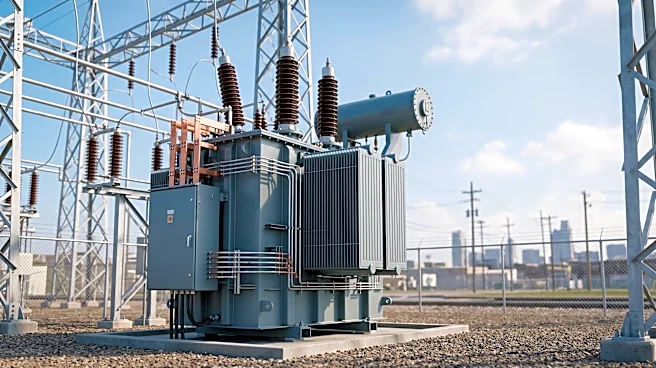
National Grid has completed a $32 million modernization and upgrade project at its Perry Street substation in Buffalo, New York. This initiative aims to support the projected increase in electricity demand within the city's Larkinville and First Ward
areas. The substation, originally constructed in 1916, previously delivered electricity at 4,160 volts. The recent upgrade has enhanced its capability to 13,200-volt distribution, enabling it to serve larger electricity loads. This project is the first of approximately 12 substations National Grid plans to modernize or rebuild in the coming years as part of its long-term infrastructure investment strategy. According to National Grid Regional Director Ken Kujawa, the renovations were a direct response to load growth in these areas, including projects exceeding 1 megawatt. The upgraded facility became operational this past summer.
Why It's Important?
This substation upgrade is crucial for Buffalo's continued economic development and the reliability of its electricity supply. The city is experiencing significant growth, with numerous mixed-use, affordable housing, commercial, and retail projects in planning or construction phases. These developments, along with the increasing adoption of electric heating and transportation, are driving a substantial rise in electricity demand. By modernizing its infrastructure, National Grid is ensuring that the power grid can accommodate this growth, preventing potential outages and supporting new economic opportunities. The investment also highlights a proactive approach to maintaining reliable service in the face of evolving energy consumption patterns, which is vital for both residents and businesses in the region.
What's Next?
National Grid's long-term infrastructure investment plan includes converting additional portions of Buffalo to 13,200-volt electricity delivery. This will involve further modernization and upgrading of older substations, retiring some facilities, and constructing new ones. The company plans to modernize or rebuild about 11 more substations in the coming years. These ongoing efforts are designed to address anticipated demand increases and ensure reliable electricity service across the city. National Grid is also focusing on implementing advanced technologies like FLISR (Fault Location Isolation Service Restoration) across its Upstate New York service territory to reduce the duration and frequency of power outages, further enhancing grid resilience.
Beyond the Headlines
The modernization of Buffalo's electricity infrastructure by National Grid extends beyond simply meeting demand; it represents a critical adaptation to the broader energy transition and urban development trends. The project's inclusion of murals depicting electricity pioneers like Thomas Edison and Nikola Tesla at the Perry Street substation subtly connects the historical roots of electricity with its future evolution. This initiative underscores the continuous need for utility companies to invest in robust and flexible grids that can support not only traditional consumption but also emerging demands from electrification of transport and heating. The proactive upgrades also mitigate risks associated with aging infrastructure and increasingly intense weather events, ensuring long-term stability and supporting the region's sustainability goals.