



What's Happening?
Indonesian fashion designers recently participated in the B-Fashion x M8 Showroom in Seoul and Busan Fashion Week, aiming to expand their presence in the South Korean market. The initiative, led by the JF3 Fashion Festival, featured designers such as LAKON
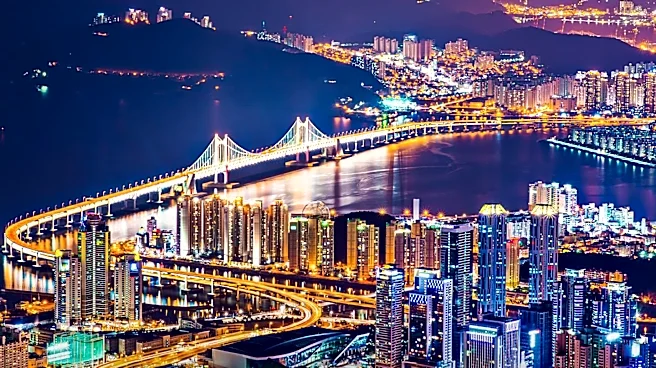
Indonesia, SOFIE, Adrie Basuki, and Hartono Gan. The B-Fashion x M8 Showroom, held from October 24 to 26, 2026, at About Project Lounge, Lotte World Tower, Seoul, allowed LAKON Indonesia, SOFIE, and Adrie Basuki to present their collections to South Korean fashion industry members. Adrie Basuki showcased the 'Jantung Nadi' collection, focusing on themes of life and heart health through batik and traditional fabrics, while SOFIE introduced 'INTERSECT,' blending traditional elements with urban lifestyles. LAKON Indonesia highlighted Indonesian handcraft techniques. The journey continued at Busan Fashion Week on October 29, 2026, where LAKON Indonesia and SOFIE were joined by Hartono Gan. LAKON Indonesia presented 'HARSA,' a 20-look collection celebrating Indonesian artisans, and Hartono Gan introduced 'HEARTBEAT,' inspired by 1990s aesthetics. This participation builds on a Memorandum of Understanding signed between JF3 and the Busan Metropolitan Government in 2025.
Why It's Important?
This initiative is important as it signifies a strategic effort to connect Indonesian designers with international buyers and industry players, fostering partnerships and greater access to the Asian market. By showcasing their collections in South Korea, Indonesian brands gain exposure to a new consumer base and potential business collaborations, which can lead to increased exports and economic growth for Indonesia's fashion sector. The collaboration also strengthens cultural exchange between Indonesia and South Korea, promoting Indonesian heritage and craftsmanship on a global stage. For South Korea, it introduces diverse fashion perspectives and potentially new trends, enriching its fashion landscape. The JF3 Fashion Festival's role in creating these pathways is crucial for the long-term development and internationalization of Indonesian fashion, allowing designers to adapt their work for different markets and build lasting connections within the global fashion industry. This expansion into the South Korean market could serve as a gateway for Indonesian designers to further penetrate other regional and international markets.
What's Next?
Following these showcases, JF3 aims to continue building relationships and expanding market reach for Indonesian designers. The collections presented in South Korea were largely developed or restyled from pieces previously shown at the JF3 Fashion Festival 2026, indicating a strategy of adapting existing work for international audiences. Thresia Mareta, Founder of LAKON Indonesia and Advisor to JF3, emphasized that these international showcases are valuable opportunities that designers must leverage to grow their brands. JF3 Chairman Soegianto Nagaria highlighted the festival's commitment to connecting designers' creativity with business opportunities and broader market access. The ongoing efforts will focus on strengthening ties with South Korean industry players and introducing the potential of Indonesian fashion to a wider audience, aligning with JF3's 2026 theme, 'RECRAFTED: Shaping the Future,' which emphasizes reworking creative potential and cultural identity for a changing industry. Future collaborations and market entries are expected as a result of these foundational events.
Beyond the Headlines
The deeper implication of this development lies in the evolving landscape of global fashion, where cultural heritage and traditional craftsmanship are being reinterpreted for contemporary international markets. Indonesian designers are not just selling clothes; they are exporting a narrative of cultural identity and artisanal skill. This movement challenges the traditional dominance of Western fashion capitals by introducing diverse aesthetics and production methods. The emphasis on circular fashion, as seen in Adrie Basuki's collection, also highlights a growing ethical and sustainable consciousness within the industry. Furthermore, the collaboration between JF3 and the Busan Metropolitan Government underscores the increasing importance of inter-governmental and organizational partnerships in facilitating cross-border trade and cultural exchange in the creative industries. This trend suggests a future where fashion is more globally interconnected, diverse, and conscious of its social and environmental impact, moving beyond mere aesthetics to encompass broader cultural and ethical considerations.