






What's Happening?
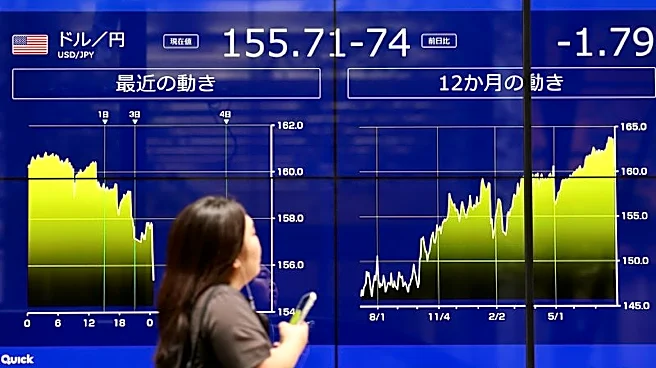
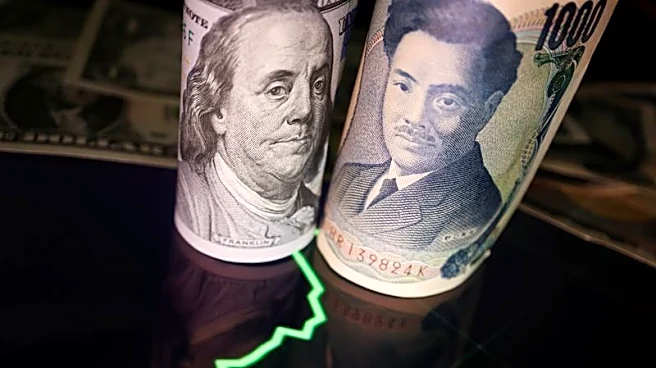
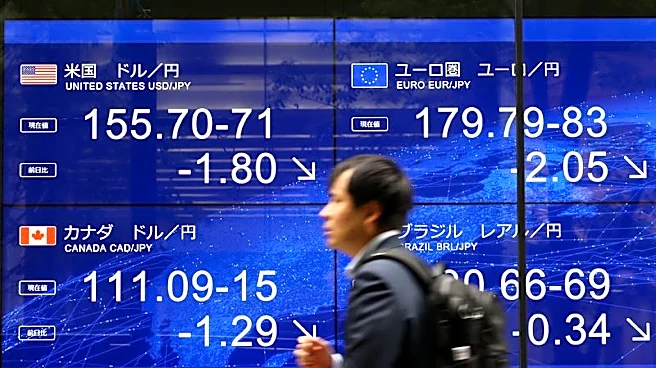
The U.S. Treasury, under Secretary Scott Bessent, has engaged in a rare intervention to support the Japanese yen, which has hit a 40-year low. Unusually, the intervention involved selling euros instead of dollars to purchase yen. This move, part of a coordinated
effort with Japan, is the first of its kind since the Asian financial crisis in 1998. Experts have expressed concerns that using euros may not effectively address the yen's fundamental weaknesses, which are attributed to Japan's monetary policy and fiscal challenges. The intervention aims to stabilize the yen temporarily, but analysts warn it may not reverse the currency's long-term decline.
Why It's Important?
This intervention is significant as it reflects a shift in U.S. foreign exchange policy, potentially marking a new era of active involvement in global currency markets. The decision to use euros instead of dollars could lead to market confusion and questions about the intervention's efficacy. The move highlights the challenges faced by Japan in managing its debt and maintaining economic stability, which have broader implications for global financial markets. The intervention also underscores the strategic importance of the yen's stability to the U.S., given Japan's role as a major holder of U.S. Treasuries.
Beyond the Headlines
The use of euros in the intervention could signal a broader strategy by the U.S. Treasury to diversify its currency interventions. This approach may reflect a desire to minimize direct impacts on the dollar while still supporting key economic partners. The intervention could also be seen as part of a larger geopolitical strategy, as the U.S. seeks to maintain strong economic ties with Japan amid shifting global dynamics. The move may prompt other countries to reconsider their own currency intervention strategies in response to changing economic conditions.