



What's Happening?
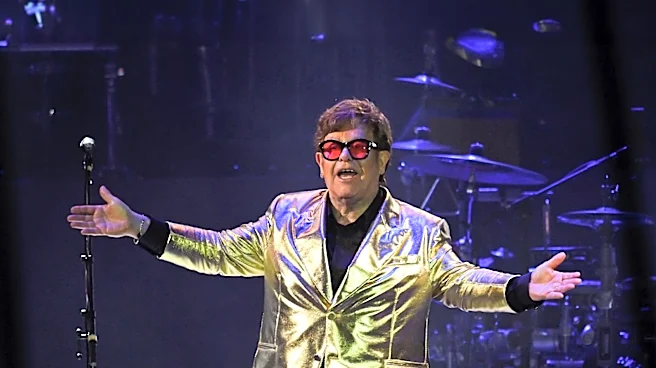
In August 1976, Elton John performed a record-breaking seven-night residency at Madison Square Garden in New York City. This event followed a period of continuous hit songs for John, allowing him to travel globally and associate with figures like Elizabeth
Taylor and John Lennon. Despite his commercial success, the critical reception for his performances and recent album, 'Rock of the Westies,' was mixed. John Rockwell of The New York Times notably dismissed his music as 'background music of the greatest banality,' while Stephen Holden of Rolling Stone found his records artistically insignificant. John himself acknowledged being a target for rock critics, stating he delighted in their disapproval. This residency marked a significant point in his career, preceding his public coming out as bisexual and a subsequent hiatus from touring.
Why It's Important?
This event highlights a pivotal moment in Elton John's career, showcasing the tension between immense commercial success and critical artistic evaluation in the music industry. The New York Times's dismissive review, labeling his music as 'background music,' underscores the often-subjective nature of music criticism and its potential disconnect from popular appeal. For Elton John, this period was not only a peak in his popularity but also a personal turning point, as it occurred just before his public coming out and a temporary withdrawal from the music scene. This critical reception, coupled with his personal revelations, likely influenced his artistic direction and public image in the years that followed, demonstrating how external pressures and personal life can intersect with a musician's professional trajectory.
What's Next?
Following the 1976 Madison Square Garden residency, Elton John separated from his touring band and announced a lengthy break from performing, which lasted until 1979. His return to prominence would not occur until several years later, during the MTV era, propelled by hits like 'I'm Still Standing.' Currently, Elton John and Bernie Taupin continue to collaborate in the studio. Although he concluded his 'Farewell Yellow Brick Road' tour in 2023, he is scheduled for performances in Mexico and at Rock in Rio in the coming months. Fans attending these future concerts should not expect to hear tracks from 'Rock of the Westies,' as he has largely removed them from his repertoire since 1979, with 'Island Girl' last performed in 1990.
Beyond the Headlines
The critical backlash Elton John faced in 1976, particularly from publications like The New York Times and Rolling Stone, reveals a deeper cultural dynamic within the music industry of the era. Critics, often aligned with emerging punk and new wave movements, may have viewed John's polished pop-rock as less authentic or innovative. This period also coincided with his bisexuality coming out, which, while not directly linked to the music criticism, could have contributed to a broader societal and industry discomfort, impacting his public perception. The narrative of an artist navigating immense fame, critical scrutiny, and personal identity shifts during a transformative decade in music history offers insights into the complex interplay between art, commerce, and social acceptance.