



What's Happening?
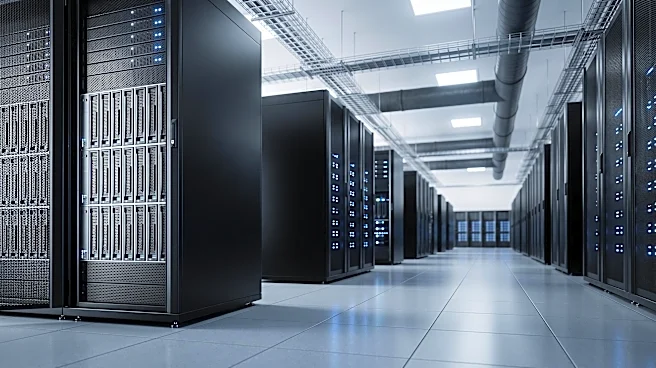
The rapid increase in artificial intelligence (AI) rack density is pushing the limits of traditional data center infrastructure, primarily due to challenges in power delivery, cooling, and managing failure risks. While typical enterprise server rooms
operate at around 11 kW per rack, AI training clusters, such as Nvidia's GB300 NVL72, require up to 142 kW per rack, with newer platforms like Vera Rubin NVL72 projected to reach 190 kW to 230 kW, and Rubin Ultra NVL576 'Kyber' specified at roughly 600 kW by late 2027. Air cooling becomes impractical above 50 kW per rack, leading to the widespread adoption of direct-to-chip liquid cooling, which now handles 100 to 150 kW per rack. However, the ultimate constraint is often power delivery, with legacy 54 VDC systems hitting a 'copper wall' above 200 kW per rack due to the impracticality of the required cabling. Redundancy requirements further reduce usable capacity, as data centers must ensure safe operation even if a power supply fails.
Why It's Important?
The escalating power and cooling demands of AI racks have significant implications for the U.S. data center industry and the broader adoption of AI. These challenges necessitate substantial investments in new infrastructure and innovative technologies, driving up the cost and complexity of building and operating AI data centers. The shift from air cooling to liquid cooling, and the transition to higher-voltage DC distribution (like 800 VDC), represent fundamental changes in data center design and engineering. Failure to address these limitations could hinder the scalability and efficiency of AI deployments, impacting the pace of AI innovation and its integration into various sectors. Moreover, the increased density means that a single failure can disrupt more computing power, making robust failure detection and graceful degradation mechanisms critical for maintaining operational reliability and preventing costly downtime.
What's Next?
The data center industry is actively developing solutions to overcome these density limitations. Higher-voltage DC distribution, such as 800 VDC, is moving beyond pilot projects, with commercial offerings expected from major vendors like Vertiv, Schneider Electric, Eaton, and Delta in late 2026. Power delivery is also being disaggregated from compute racks, as seen in projects like the Open Compute Project's Mount Diablo, allowing for independent scaling of power. On-site and behind-the-meter power generation are gaining traction as operators seek to reduce reliance on utility grids and ensure reliable power supply. Looking three to five years out, typical high-density AI racks are expected to exceed 100 kW, with direct liquid cooling and 400 V power delivery becoming standard. Firmware-level failure detection and throttling mechanisms will also become crucial for managing risks in these ultra-dense environments. The grid's capacity to supply power will ultimately be a decisive factor, with over 2,060 GW of generation and storage waiting in U.S. interconnection queues by the end of 2025.
Beyond the Headlines
The relentless pursuit of higher AI rack density highlights a fundamental tension between technological advancement and physical constraints. This challenge extends beyond engineering to broader societal and environmental concerns. The massive energy requirements of these next-generation data centers will place immense pressure on existing power grids and accelerate the need for sustainable energy solutions. This could drive significant innovation and investment in renewable energy sources and energy storage technologies. Furthermore, the increasing complexity and specialized nature of these facilities could lead to a greater concentration of AI infrastructure in the hands of a few large players, potentially impacting competition and access to advanced computing resources. The need for advanced cooling and power solutions also underscores the growing importance of specialized expertise and supply chains in the data center ecosystem, creating new economic opportunities and dependencies.