



What's Happening?
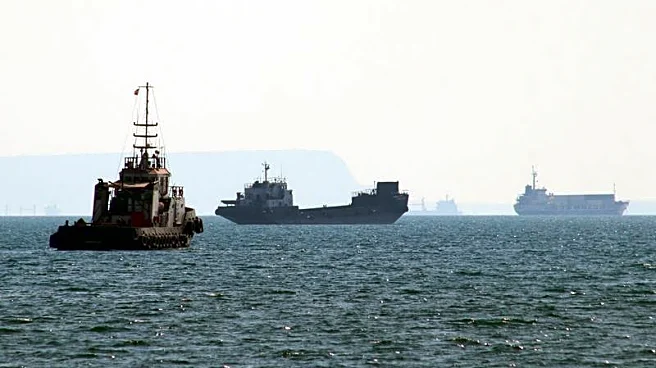
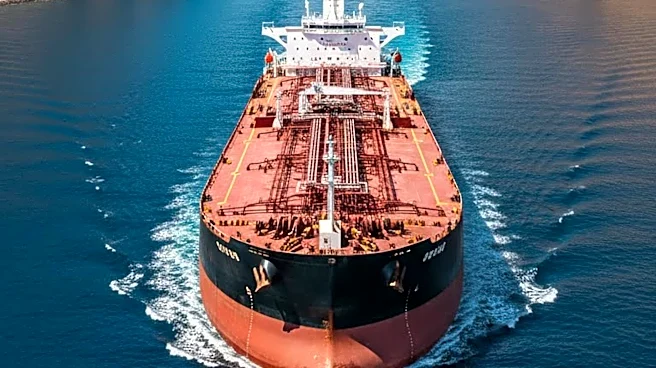
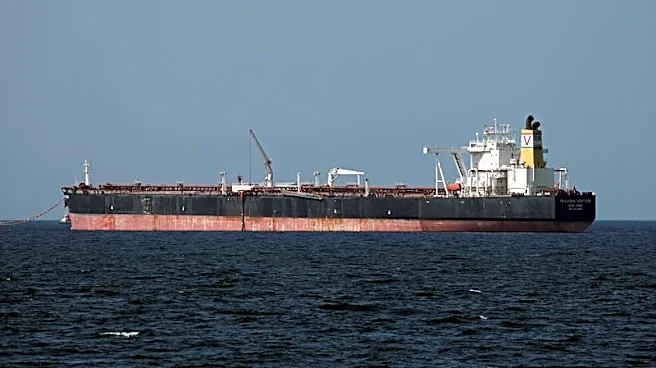
Mukesh Sahdev, chief oil analyst at XAnalysts, indicates that the global oil market has not yet registered the impact of decreasing oil shipments through the Strait of Hormuz and other key regions. Sahdev suggests that this situation is likely to change,
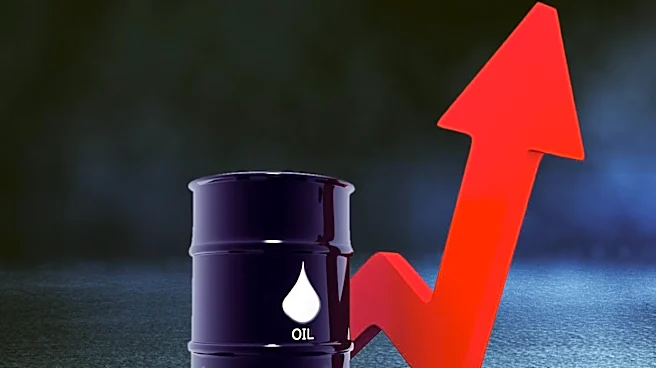
leading to potential increases in oil prices. He highlights that global crude supplies are tightening, a trend exacerbated by reduced flows from critical shipping lanes. Furthermore, Sahdev points out that investors are currently underestimating the risks associated with further escalation between the U.S. and Iran. This underestimation could lead to a sudden market reaction if tensions rise. Additionally, China's renewed efforts in stockpiling crude oil are expected to place additional pressure on global stockpiles, contributing to the tightening supply scenario. The combination of these factors creates a volatile environment for oil prices, with a delayed but significant impact anticipated.
Why It's Important?
The current assessment by Mukesh Sahdev underscores a critical disconnect between present market behavior and underlying geopolitical and supply chain realities. The Strait of Hormuz is a vital chokepoint for global oil transit, and any disruption or reduction in flows through this area has profound implications for energy security and prices worldwide. For the U.S. economy, rising oil prices can translate into higher costs for consumers through increased gasoline prices and elevated operational expenses for businesses reliant on transportation and energy. This could fuel inflation, impact consumer spending, and potentially slow economic growth. The underpricing of U.S.-Iran escalation risks by investors suggests a vulnerability in market sentiment; a sudden shift in geopolitical dynamics could trigger a sharp and rapid increase in oil prices, catching many off guard. China's stockpiling efforts further intensify competition for available crude, potentially driving up prices and creating supply challenges for other nations, including the U.S. This situation could lead to strategic energy policy adjustments and increased focus on domestic energy production and alternative sources.
What's Next?
The oil market is poised for potential significant shifts as the factors identified by Mukesh Sahdev continue to develop. Investors will likely begin to re-evaluate the risks associated with declining Hormuz flows and U.S.-Iran tensions, which could lead to increased volatility and upward pressure on oil prices. Energy companies and policymakers in the U.S. may need to prepare for a scenario of tighter global crude supplies and higher energy costs. This could involve exploring strategies to enhance domestic oil production, diversify energy sources, or implement measures to mitigate the economic impact of rising fuel prices on consumers and industries. The actions of major oil-consuming nations like China, particularly their stockpiling activities, will also be closely watched as they directly influence global supply-demand dynamics. Any further escalation in U.S.-Iran relations could serve as a catalyst for a rapid market correction, prompting immediate responses from governments and energy markets globally.
Beyond the Headlines
The situation described by Mukesh Sahdev extends beyond immediate price fluctuations, touching upon deeper geopolitical and economic vulnerabilities. The reliance on critical maritime chokepoints like the Strait of Hormuz highlights the fragility of global supply chains and the constant threat of disruption from regional conflicts. This scenario could accelerate the global push towards energy independence and the development of renewable energy sources, as nations seek to reduce their exposure to volatile oil markets and geopolitical risks. Furthermore, the underestimation of geopolitical risks by investors points to a broader challenge in financial markets: the difficulty of accurately pricing in non-economic factors. This could lead to calls for more sophisticated risk assessment models that integrate geopolitical analysis more effectively. The interplay between U.S.-Iran relations, global oil supply, and China's strategic energy reserves also underscores the complex web of international dependencies and rivalries that shape the global economic landscape, potentially leading to long-term shifts in international trade and diplomatic relations.