







What's Happening?
The global electric vehicle (EV) market is undergoing a significant transformation, as highlighted in a report by Frost & Sullivan. The report, titled 'OEM Strategies on Next Generation Electric Vehicles, Global, 2025–2031,' projects that global sales
of battery electric vehicles (BEVs) will rise from 17.8 million units to approximately 32.6 million units by 2031. This growth is expected to accelerate beyond 2027, driven by the introduction of lower-cost EVs and stricter government emissions regulations. The report emphasizes that the market is entering a pivotal phase where affordability, manufacturing efficiency, and technological differentiation will be crucial for long-term success. Original Equipment Manufacturers (OEMs) are moving towards integrated ecosystems that include modular platforms, advanced battery technologies, and strategic charging partnerships. This shift is partly in response to growing competition from Chinese manufacturers and the need to reduce battery costs.
Why It's Important?
The transformation of the EV market has significant implications for the automotive industry and related sectors. As OEMs invest in modular platforms and advanced battery technologies, they are likely to drive down costs and make EVs more accessible to a broader consumer base. This could lead to increased adoption of EVs, contributing to global efforts to reduce carbon emissions and combat climate change. The focus on supply chain integration and local manufacturing could also bolster economic growth and job creation in regions investing in these technologies. Additionally, the competition from Chinese manufacturers may spur innovation and efficiency among global automotive firms, potentially leading to better products and services for consumers.
What's Next?
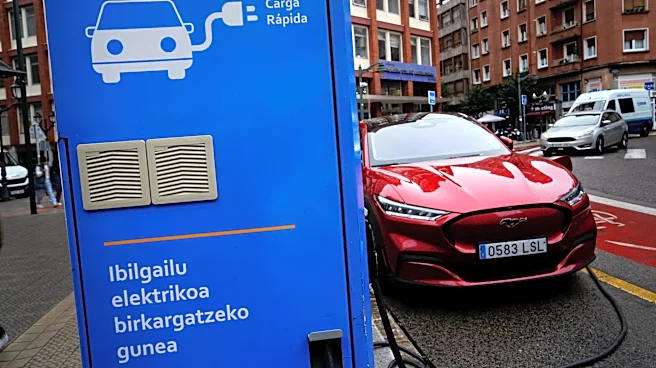
As the EV market continues to evolve, OEMs are expected to further optimize global production and strengthen supply chains through vertical integration and localized manufacturing. Investments in ultra-fast charging infrastructure and next-generation battery technologies, such as sodium-ion and solid-state batteries, are anticipated to improve performance and reduce charging times, accelerating mainstream EV adoption. The report suggests that manufacturers like BMW, Ford, Tesla, and others will focus on these areas to capture growth opportunities. The ongoing transformation may also prompt regulatory changes and new policies to support the burgeoning EV market.