
What's Happening?
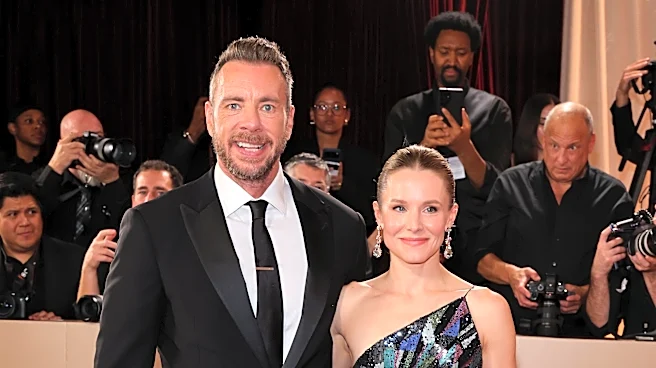
Dax Shepard has publicly addressed and refuted claims of being an 'abusive husband' that arose after an anniversary Instagram post by his wife, Kristen Bell. The controversy stemmed from a post where Bell recounted
Shepard's comment: "I would never kill you. A lot of men have killed their wives at a certain point. Even though I'm heavily incentivized to kill you, I never would." Shepard clarified on his 'Armchair Expert' podcast that this comment was an inside joke between them, originating from watching a 'Dateline' episode where spouses often kill for financial gain. He explained that Bell found the comment romantic, as it was his way of complimenting her by stating he would never harm her despite any hypothetical 'incentives.' The comment, however, was misinterpreted by some as indicative of an abusive dynamic, especially as it coincided with Domestic Abuse Awareness Month, leading to a significant media backlash and public discussion about their relationship.
Why It's Important?
This incident highlights the complexities of public perception and the challenges celebrities face in managing their personal narratives in the age of social media. A private joke, when shared publicly, can be stripped of its original context and intent, leading to widespread misinterpretation and severe criticism. For Shepard and Bell, who have often shared candid details about their relationship, this backlash underscores the fine line between transparency and vulnerability to public judgment. It also reflects a broader societal sensitivity towards issues like domestic abuse, where any perceived hint of such behavior can trigger strong reactions, regardless of the actual intent. The incident serves as a case study on how quickly public opinion can turn and how difficult it can be for public figures to reclaim their narrative once a negative perception takes hold, impacting their public image and potentially their professional lives.
What's Next?
Following Shepard's detailed explanation on his podcast, the immediate next step for the couple will likely involve observing how the public and media react to his clarification. While Shepard has directly addressed the allegations, it remains to be seen if this explanation will fully quell the 'abusive husband' narrative that has gained traction. They may choose to be more cautious about the specific details they share regarding their private jokes or relationship dynamics on public platforms. There could also be continued discussions in media outlets about the nature of humor in relationships and the responsibility of public figures when sharing potentially sensitive content. For Shepard, maintaining the integrity of his podcast and public persona will be crucial, as he navigates the aftermath of these accusations and works to reinforce his image as a supportive partner.
Beyond the Headlines
Beyond the immediate controversy, this event touches upon deeper societal conversations about humor, intent, and the interpretation of language, particularly in the context of gender dynamics and domestic violence awareness. The differing reactions to Shepard's comment—Bell finding it romantic versus the public perceiving it as abusive—illustrates the subjective nature of communication and the potential for miscommunication, especially when cultural sensitivities are high. It also raises questions about the 'cancel culture' phenomenon, where a single misstep or misinterpretation can lead to significant reputational damage. The incident prompts reflection on how society processes and reacts to celebrity disclosures, often projecting broader social issues onto individual relationships. It underscores the ongoing need for nuanced understanding and critical thinking when engaging with public figures' personal lives, rather than making snap judgments based on decontextualized information.