






What's Happening?
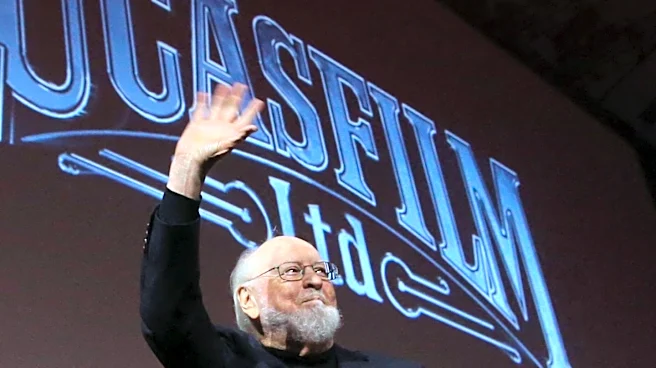
In the early 1980s, a team at Lucasfilm, led by James A. “Andy” Moorer, developed a groundbreaking system called SoundDroid. This innovation allowed audio waveforms to be visually manipulated—cut, moved, and changed—on a screen without altering the original
recording. The core of this system was the Audio Signal Processor (ASP). Although SoundDroid was showcased at the SMPTE conference in Los Angeles in October 1985, it never reached the commercial market. However, its underlying concepts profoundly influenced the development of digital audio workstations (DAWs). Matteo Milani's new book, 'DROIDS,' details the creation of this technology through interviews with the engineers involved, including insights into challenges like storing large audio files on 'washing-machine-sized' hard disks and the practicalities of sound design for films like 'Indiana Jones and the Temple of Doom.'
Why It's Important?
The SoundDroid system, despite its limited commercial release, laid foundational groundwork for modern digital audio editing. Its ability to visualize and manipulate sound digitally was a paradigm shift, moving audio production beyond physical tape editing. This innovation significantly impacted the film industry, particularly in sound design, by offering unprecedented precision and flexibility. The technology allowed sound designers like Ben Burtt to create complex audio effects, such as synthesized arrows that could be infinitely sustained and integrated seamlessly with recorded sounds. The principles pioneered by Lucasfilm's team enabled the evolution of sophisticated audio tools that are now standard in music production, film post-production, and broadcasting, demonstrating how early research and development in specialized fields can have widespread technological implications.
Beyond the Headlines
The story of SoundDroid highlights the often-unseen influence of research and development within creative industries. George Lucas's decision to fund a dedicated research team at Lucasfilm, allowing engineers six years to develop tools that didn't yet exist, underscores a commitment to innovation beyond immediate commercial returns. This approach fostered an environment where groundbreaking technologies could emerge, even if their direct products didn't achieve market dominance. The engineers' experiences also shed light on the state of cinema audio at the time, revealing primitive sound systems in theaters and the challenges of ensuring sound quality for audiences. This context emphasizes how technological advancements like SoundDroid were not just about efficiency but also about elevating the artistic and technical standards of film sound, pushing the boundaries of what was creatively possible.