




What's Happening?
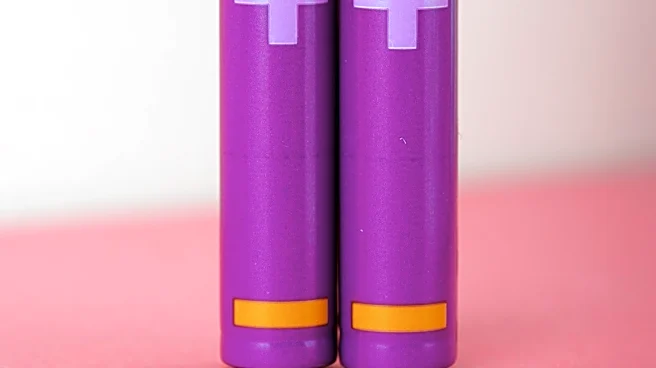
Researchers in China have developed a new sodium metal battery (SMB) design that can fully charge in just four minutes and retains its capacity for years. This design uses a metallic sodium anode and a quasi-solid gel electrolyte to prevent dendrite formation,
a common issue in sodium batteries. The new battery retains 80.1% of its charge capacity after rapid charging and 90% over 2,000 cycles when charged more slowly. This development could offer a cheaper and safer alternative to lithium-ion batteries, which are currently prevalent in electric vehicles and consumer electronics.
Why It's Important?
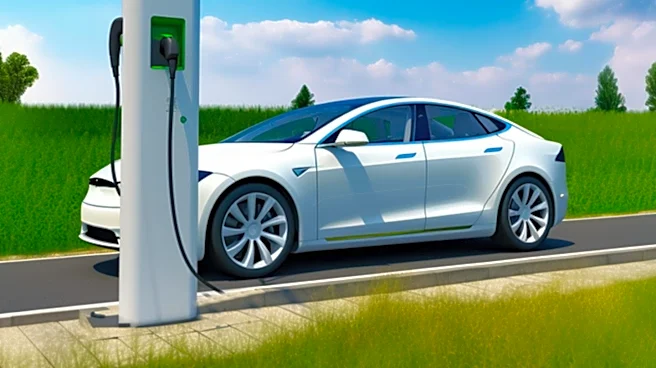
The advancement in sodium metal battery technology could significantly impact the electric vehicle and consumer electronics industries. SMBs offer a potential solution to the high costs and safety concerns associated with lithium-ion batteries, which rely on scarce metals and are prone to catching fire. By providing a faster charging and more stable alternative, SMBs could accelerate the adoption of electric vehicles and other battery-dependent technologies, contributing to a reduction in carbon emissions and reliance on fossil fuels.
What's Next?
Further research and development are needed to address the challenges of dendrite formation and stability at lower temperatures. If these issues can be resolved, SMBs could be scaled for commercial use, potentially reshaping the battery market. The focus will likely be on improving the technology for use in electric vehicles and consumer electronics, with the aim of achieving widespread adoption in the coming years.