



What's Happening?
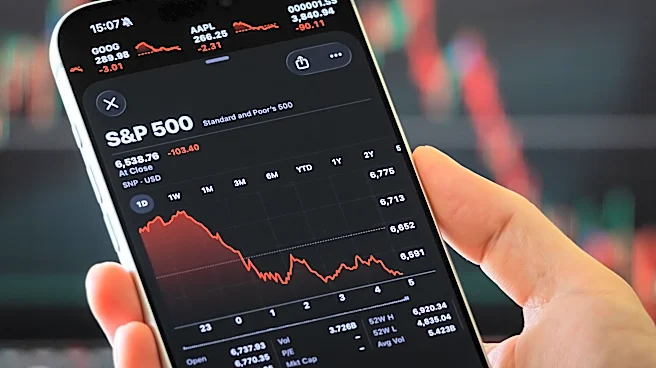
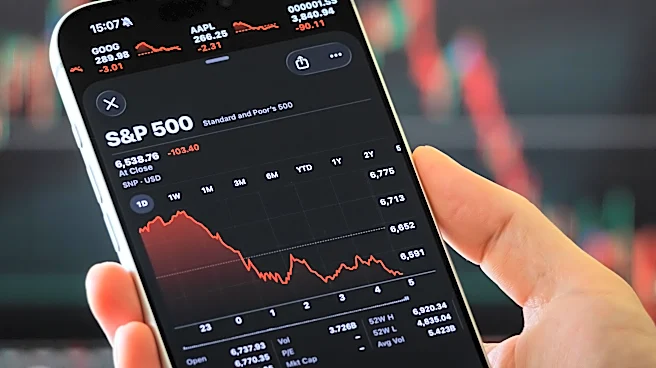
The VIX, a key indicator of stock market volatility, is currently experiencing a significant spike. This surge in volatility is leading to widespread investor sell-offs, as market participants react to increased uncertainty. Earlier warnings had suggested
that investors should have considered selling during periods of stock market strength. The current environment is characterized by a shake-out of stocks, where rapid price movements and heightened risk perception are causing many to exit their positions. For long-term investors, this period of panic selling is generally considered an unfavorable strategy, as it often leads to realizing losses rather than weathering market fluctuations. The VIX's upward movement reflects a growing apprehension among investors regarding future market conditions and potential downturns.
Why It's Important?
The spiking VIX is a critical development for the U.S. financial markets as it signals a significant increase in perceived risk and uncertainty. This heightened volatility can lead to substantial capital outflows from equities, impacting individual investors, institutional funds, and the broader economic landscape. A sustained period of high VIX values often precedes or accompanies market corrections, potentially eroding investor confidence and slowing economic growth. For businesses, increased market instability can make it more challenging to raise capital, affect consumer spending due to wealth effects, and create an environment of caution. The current sell-off driven by volatility could also present opportunities for contrarian investors who are prepared to buy assets at lower prices, but it primarily signifies a period of heightened risk for the majority of market participants.
What's Next?
In the immediate future, the market will likely continue to experience elevated volatility as long as the VIX remains high. Investors may continue to sell off stocks, particularly those perceived as higher risk, leading to further price declines. Market analysts will closely monitor economic data and corporate earnings reports for any signs that could either exacerbate or alleviate the current uncertainty. Central bank communications regarding monetary policy will also be crucial, as any hawkish signals could further fuel market anxiety, while dovish stances might offer some reassurance. Long-term investors will need to decide whether to hold through the volatility, rebalance their portfolios, or seek opportunities in less volatile asset classes. The duration and intensity of this volatile period will depend on a confluence of economic, geopolitical, and corporate factors.
Beyond the Headlines
Beyond the immediate market reactions, a prolonged period of high volatility, as indicated by the VIX spike, can have deeper implications for investor behavior and market structure. It may lead to a shift in investment strategies, with a greater emphasis on risk management and capital preservation over aggressive growth. This could also prompt a re-evaluation of portfolio diversification techniques and the role of alternative investments. Furthermore, sustained market turbulence can impact regulatory scrutiny, potentially leading to calls for new measures to enhance market stability or protect retail investors. The psychological impact on investors, particularly those new to the market, can be significant, potentially leading to a more cautious investment approach in the long run, even after volatility subsides. This period could also highlight the importance of financial literacy and disciplined investing strategies.