








What's Happening?
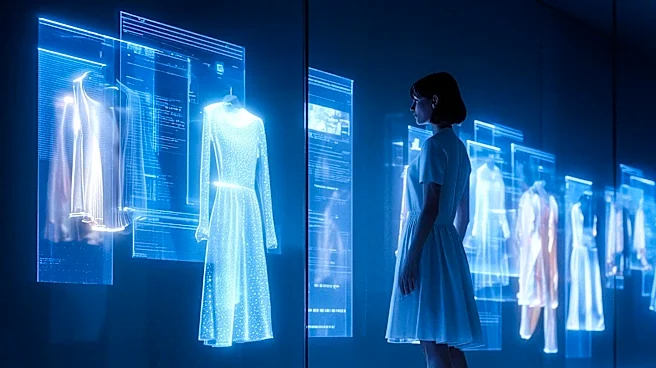
The fashion industry is undergoing a significant digital transformation, integrating advanced technologies into design, production, and consumer experience. Designers are increasingly building entire collections on screen, utilizing digital draping to sketch,
fit, and refine silhouettes virtually. This process reduces the need for physical samples and minimizes waste. Furthermore, augmented reality (AR) is revolutionizing the try-on experience, allowing consumers to virtually try on garments using their phone cameras or smart mirrors, bridging the gap between online browsing and in-person shopping. The rise of digital-only fashion, where garments exist solely for avatars, game worlds, and social media, is pushing designers to create without the constraints of physical limitations like gravity or cost. This shift also includes the development of smart fabrics woven with conductive threads and sensors, capable of responding to body temperature or tracking movement, blurring the lines between clothing and gadgets. The industry is also seeing a move towards sustainable practices, with recycled fibers, plant-based leathers, and waterless dyeing methods becoming more prevalent in collections.
Why It's Important?
This digital evolution is crucial for the U.S. fashion industry as it addresses several key challenges and opens new opportunities. The adoption of digital design tools leads to increased efficiency and reduced material waste, aligning with growing consumer demand for sustainability and ethical production. Virtual try-on technologies can significantly decrease product returns, a major cost for retailers, by improving customer satisfaction with fit and appearance before purchase. The emergence of digital-only fashion creates entirely new revenue streams and engagement models, particularly with younger, digitally native consumers who are active in virtual worlds and social media. This also democratizes fashion by lowering barriers to entry for designers through platforms offering free creation tools and affordable virtual spaces. The integration of smart fabrics could lead to innovative product categories, merging fashion with health and technology, potentially creating new markets and consumer needs. Overall, these advancements are reshaping the competitive landscape, favoring brands that can innovate and adapt to these technological shifts.
What's Next?
The fashion industry is expected to further integrate AI and virtual reality (VR) into its core operations. We can anticipate more sophisticated AI-powered design tools that can generate patterns, suggest material combinations, and even predict trends based on data analytics. The expansion of metaverse platforms will likely lead to a greater demand for digital fashion assets, prompting more brands to establish virtual showrooms and participate in digital fashion weeks. This will also drive the development of more advanced avatar customization options and interoperability across different virtual environments. On the consumer front, AR shopping experiences will become more commonplace and refined, offering hyper-realistic virtual try-ons and personalized recommendations. Furthermore, the focus on sustainability will intensify, with continued research and development into eco-friendly materials and production processes, potentially leading to industry-wide standards for digital and physical product lifecycles. The legal and ethical frameworks surrounding data privacy in virtual try-ons and smart garments will also need to evolve.
Beyond the Headlines
Beyond the immediate technological advancements, the digital transformation in fashion raises profound questions about identity, ownership, and the very definition of clothing. Digital-only fashion challenges traditional notions of physical possession and value, as consumers invest in garments that exist solely in virtual spaces. This shift could lead to a re-evaluation of craftsmanship, where digital artistry becomes as valued as traditional tailoring. Ethical considerations around data collection from smart garments and virtual try-ons will become increasingly important, necessitating robust privacy policies and transparent data usage. The environmental impact of digital fashion, while seemingly minimal due to lack of physical production, could also be scrutinized in terms of energy consumption for rendering and maintaining virtual worlds. Culturally, the blurring lines between physical and digital fashion may influence self-expression and social interaction, creating new forms of community and status within virtual realms. This evolution could also democratize access to high fashion, allowing a broader audience to engage with luxury brands in new and accessible ways.