






What's Happening?
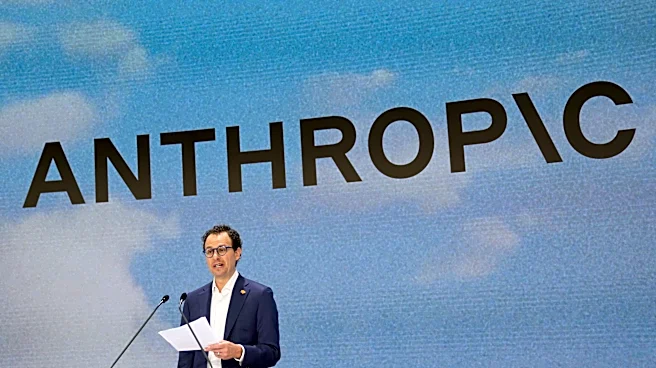
The seven co-founders of Anthropic, an artificial intelligence company, have made a nonbinding pledge to donate 80% of their personal equity, totaling approximately $113 billion, to philanthropic causes. This commitment is based on an $83 IPO share price.
If fulfilled, this would position them among the largest philanthropists in U.S. history, surpassing the contributions of figures like Warren Buffett and Bill and Melinda French Gates. The founders, many of whom have ties to the effective altruism movement, have not specified a timeline for these donations or the exact recipients. This approach differs from typical tech philanthropy, where significant giving often occurs years after a company's public offering. However, the financial filing explicitly states that these commitments are voluntary and do not constitute legally binding obligations, leading to some skepticism within the philanthropic community regarding the eventual fulfillment of these pledges.
Why It's Important?
This unprecedented philanthropic pledge by Anthropic's founders holds significant implications for the U.S. charitable landscape. The potential infusion of $113 billion could be a 'game-changer' for nonprofits, according to Priya Shanker, executive director of the Stanford Center on Philanthropy and Civil Society, providing much-needed resources. However, the effective altruism philosophy, which many founders adhere to, often prioritizes global impact over local giving, potentially directing funds away from San Francisco, where Anthropic is based. This raises questions about how much of this wealth will benefit local communities versus international causes like animal welfare or pandemic preparedness. The nonbinding nature of the pledge also introduces uncertainty, as past philanthropic promises from tech billionaires have not always been fully realized. This situation highlights a growing tension in philanthropy: the immense wealth generated by new industries like AI and the ethical considerations surrounding its distribution, particularly when the industries themselves may create societal challenges.
What's Next?
The immediate next steps for Anthropic's founders involve determining the specific causes and mechanisms for their pledged donations. While no timeline has been set, the philanthropic community will be closely watching for concrete actions. The Silicon Valley Community Foundation has noted an increasing interest among AI-involved donors in local issues such as housing, education, science, and healthcare, suggesting that some funds might be directed towards addressing challenges within the Bay Area. However, the influence of effective altruism could lead to a significant portion of the donations being allocated to global initiatives. The lack of a legally binding obligation means that the actual amount and timing of the donations remain at the discretion of the individual founders. Future developments will likely include announcements of specific grants or the establishment of new philanthropic entities, which will provide more clarity on the impact of this substantial pledge.
Beyond the Headlines
The Anthropic founders' pledge brings to light deeper ethical and philosophical questions surrounding wealth accumulation and philanthropy in the tech industry. The concept of effective altruism, which seeks to maximize positive impact per dollar, often leads to funding unconventional causes, such as aquatic animal welfare, which may not resonate with traditional philanthropic priorities. This approach can create a disconnect between the wealth generated in tech hubs like San Francisco and the beneficiaries of that wealth, potentially exacerbating local inequalities even as global issues are addressed. Furthermore, the nonbinding nature of such large pledges raises concerns about accountability and the potential for unfulfilled promises, echoing past instances where tech leaders' philanthropic commitments did not fully materialize. This situation underscores the ongoing debate about the role of private wealth in addressing societal problems and the mechanisms through which such vast sums can be effectively and equitably deployed.