








What's Happening?
Tactical Resources is implementing a novel strategy for rare earth element (REE) extraction at its Peak Project in West Texas. Unlike traditional mining operations that involve identifying new deposits, developing mines, and constructing extensive infrastructure,
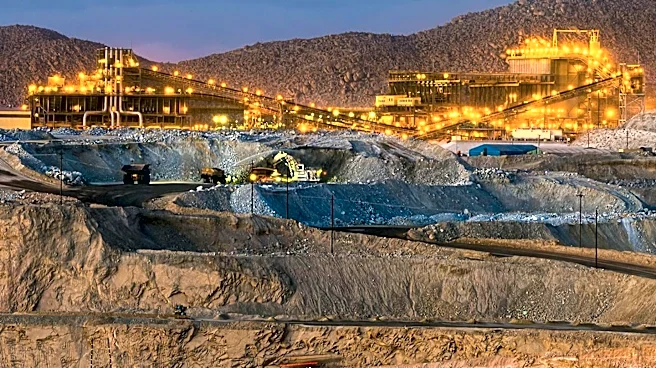
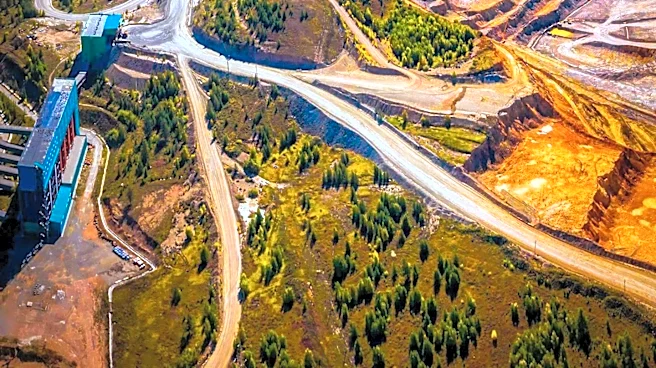
Tactical Resources is targeting rare earth-enriched material that has already been mined and stockpiled at the Sierra Blanca Quarry. This quarry currently serves to produce ballast for the Union Pacific Railway. The company aims to recover valuable REEs from 1.5 million tonnes of existing material, bypassing the costly and time-consuming initial stages of conventional mining. Furthermore, Tactical Resources plans to simplify the processing sequence by utilizing a direct leaching method, which involves using a chemical solution to extract the elements, potentially reducing the number of processing stages typically required.
Why It's Important?
The U.S. is actively seeking to reduce its reliance on overseas suppliers for critical minerals, including rare earths, which are essential for advanced technologies such as electric vehicles, semiconductors, and defense systems. Traditional rare earth mining and processing are often lengthy and expensive endeavors, hindering the U.S.'s ability to quickly establish domestic supply chain independence. Tactical Resources' approach offers a potentially faster and more cost-effective pathway to domestic rare earth production by leveraging existing stockpiles and an innovative processing method. This strategy aligns with national efforts to secure a reliable supply of critical minerals and mitigate geopolitical risks associated with foreign dependency. If successful, this model could accelerate the availability of rare earths for U.S. industries, contributing to economic stability and national security.
What's Next?
Tactical Resources is currently in the early stages of development for its Peak Project. The company's immediate next steps involve refining its processing method, assessing permitting requirements, advancing engineering plans, and establishing relationships with potential downstream partners. These milestones are crucial for determining the project's commercial viability and moving towards full-scale production. While the direct leaching approach from existing stockpiles presents significant advantages in terms of time and cost, its economic and processing performance still needs to be proven. The success of Tactical Resources could pave the way for other companies to explore similar innovative methods for rare earth extraction, potentially transforming the landscape of domestic critical mineral supply. The company's strategy is a direct response to the U.S. government's push for a secure domestic supply chain.
Beyond the Headlines
The innovative approach by Tactical Resources could have broader implications for the environmental footprint of rare earth mining. By utilizing already mined and stockpiled material, the company potentially reduces the need for new land disturbance and the associated environmental impacts of traditional mining. The direct leaching process, if proven efficient and environmentally sound, could also offer a cleaner alternative to conventional chemical extraction methods, which often generate toxic waste. This shift towards more sustainable and less disruptive extraction techniques could set a precedent for the critical minerals industry, addressing long-standing concerns about the environmental costs of rare earth production. It also highlights the potential for technological innovation to solve complex resource challenges and contribute to a more circular economy for critical materials.