
What's Happening?
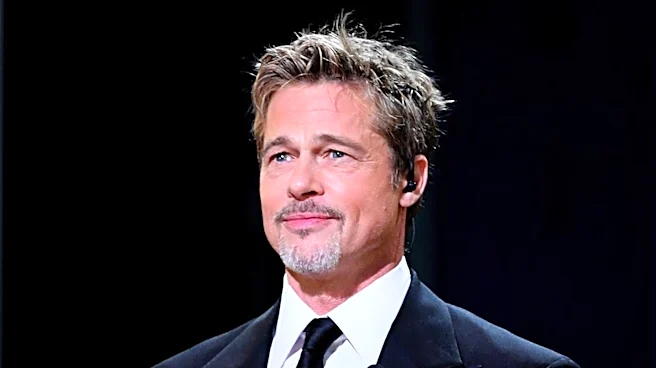
Brad Pitt has provided an update on the long-awaited sequel to 'World War Z,' confirming that the project is in active development and that he is involved in discussions about its creative direction. Paramount Pictures had previously confirmed in 2026
that the sequel had re-entered active development after several stalled attempts over the past 13 years. Pitt, who played Gerald Lane in the 2013 original, stated that the team is currently working on the script, focusing on 'zombie logic' and the need to introduce fresh ideas to the well-worn zombie genre. Edward Berger, the director of the Oscar-winning 'All Quiet on the Western Front,' is attached to direct the film. The original movie, which was loosely based on Max Brooks' 2006 novel, earned over $540 million worldwide.
Why It's Important?
The continued development of the 'World War Z' sequel is significant for fans of the original film and the zombie genre, indicating that a follow-up is still a strong possibility. Brad Pitt's direct involvement and his emphasis on bringing 'fresh' ideas suggest a commitment to quality and innovation, which could help the sequel stand out in a crowded market of zombie-themed content. For Paramount, reviving a franchise that grossed over half a billion dollars globally represents a strategic move to capitalize on proven intellectual property. The attachment of an acclaimed director like Edward Berger also signals a potential elevation in the film's artistic ambition, which could attract a broader audience and critical attention, impacting its commercial success and the studio's future franchise strategies.
What's Next?
The primary hurdle for the 'World War Z' sequel remains the completion of a compelling script. Brad Pitt indicated that filming could potentially begin as early as next year, but only 'if we can get the script together.' This suggests that the creative team is actively refining the narrative to ensure it offers a unique perspective within the zombie genre. Once the script is finalized and approved, the project can move forward with pre-production, including casting announcements beyond Pitt, securing a production schedule, and eventually setting a release date. The success of the script development phase will be crucial in determining the timeline and ultimate realization of the long-anticipated sequel.
Beyond the Headlines
The extended period of development for the 'World War Z' sequel, spanning over a decade, reflects the challenges studios face in maintaining creative momentum and securing talent for high-profile projects. Pitt's insistence on 'fresh' ideas highlights a broader industry trend where creators are increasingly seeking to subvert or evolve established genre tropes to avoid audience fatigue. This pursuit of novelty in a familiar genre can be a double-edged sword, as it requires balancing innovation with the expectations of existing fans. The eventual outcome of this sequel, particularly its ability to deliver on the promise of 'fresh' zombie storytelling, could influence how studios approach the revival of other long-dormant franchises and the creative risks they are willing to take in established cinematic universes.