





What's Happening?
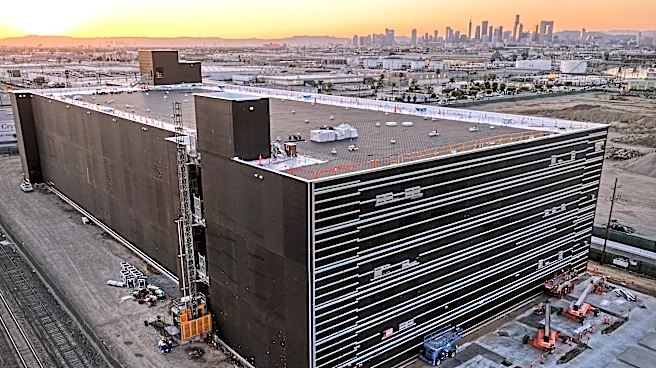
Liberation Bioindustries, a contract manufacturer, has paused the construction of its biomanufacturing facility in Richmond, Indiana, as it seeks additional funding to complete the project. The facility, which is 75% complete, was initially expected to be operational
by the end of 2024. Mark Warner, who led the project, is transitioning from his full-time role as CTO to a fractional role, although he maintains confidence in the project's potential. The company has raised $70-80 million in equity and secured a large equipment financing package but still requires substantial funds to finish the site. The facility is designed to house four 150,000-liter fermenters and is intended to support a variety of biomanufacturing processes. Despite the pause, there is significant interest in the facility's capacity, with potential commitments exceeding 200% of its available capacity.
Why It's Important?
The delay in completing the Richmond facility highlights the financial challenges faced by biomanufacturing projects, particularly those involving first-of-a-kind infrastructure. The facility's completion is crucial for meeting the growing demand for commercial-scale biomanufacturing infrastructure in the U.S. The pause in construction could impact companies relying on the facility for production, potentially affecting the supply chain for biomanufactured products. The situation underscores the broader issue of securing financing for innovative projects in the biotech sector, where traditional venture capital and project finance models may not be suitable. The outcome of this funding challenge could influence future investments in similar biomanufacturing projects.
What's Next?
Liberation Bioindustries is working to secure the necessary funding to resume construction, with no hard deadline set for obtaining these funds. The company is exploring bespoke agreements with potential customers to provide more certainty to capital providers. These agreements aim to bridge the gap between non-binding letters of intent and take-or-pay contracts. The company is also engaging with existing investors and potential new capital partners to find a viable financing solution. The resolution of this funding issue will determine the timeline for the facility's completion and its ability to meet the demand for biomanufacturing capacity.