


What's Happening?
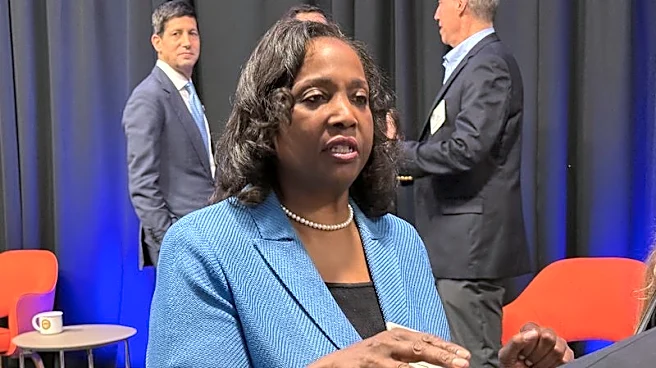
Federal Reserve Governor Lisa Cook recently stated that the U.S. central bank's current policy rate is insufficient to address inflation levels, which she views with "great concern." Her comments were made on Friday, amidst market anticipation for upcoming
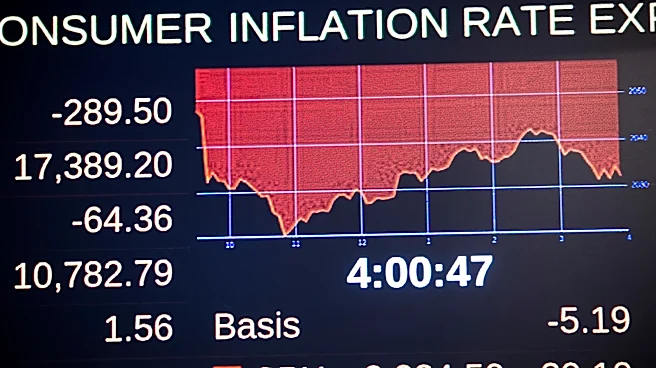
U.S. Personal Consumption Expenditures data, a key inflation gauge. Cook's remarks suggest a push for additional interest rate hikes, indicating a belief that the current monetary policy is not adequately curbing inflationary pressures. This perspective comes as gold prices saw a rebound after a 14-month low, influenced by Federal Reserve commentary and expectations regarding interest rate trajectories. Markets are currently pricing in a 93% chance of an interest rate hike at the central bank's December policy meeting, a slight decrease from the previous week's near 100% probability.
Why It's Important?
Governor Cook's stance is significant because it signals a potential for more aggressive monetary tightening by the Federal Reserve. If the Fed adopts a more hawkish approach, it could lead to higher borrowing costs for consumers and businesses, impacting economic growth. For industries, particularly those sensitive to interest rates like housing and automotive, increased rates could dampen demand. Investors are closely watching these developments, as higher interest rates generally reduce the appeal of non-yielding assets like gold, though recent market dynamics show gold gaining some support from repriced U.S. interest rate paths. The Federal Reserve's actions directly influence the cost of capital, consumer spending, and overall economic stability, making Cook's advocacy for higher rates a critical indicator for future economic conditions and market behavior.
What's Next?
Market participants are now keenly awaiting the release of the U.S. Personal Consumption Expenditures data, scheduled for Wednesday. This data is a crucial metric for the Federal Reserve in assessing inflation and will likely influence the central bank's decisions regarding future interest rate adjustments. Governor Cook's comments suggest that the Federal Reserve may consider further rate hikes beyond what is currently priced into the market, especially if inflation data remains elevated. The central bank's policy meeting in December will be a key event, where the probability of an interest rate hike, currently at 93%, will either be confirmed or altered. The trajectory of U.S. interest rates will continue to be a dominant factor for financial markets, impacting everything from stock performance to commodity prices.
Beyond the Headlines
Governor Cook's strong emphasis on the inadequacy of current interest rates to combat inflation highlights a broader debate within the Federal Reserve regarding the appropriate pace and magnitude of monetary policy adjustments. Her concerns underscore the challenge of balancing inflation control with maintaining economic stability. A more aggressive approach to rate hikes, while potentially effective in curbing inflation, carries the risk of slowing economic growth or even triggering a recession. Conversely, a delayed or insufficient response to inflation could lead to its entrenchment, eroding purchasing power and creating long-term economic instability. This delicate balancing act has significant implications for the U.S. economy, influencing everything from employment rates to the cost of living for everyday Americans.