



What's Happening?
7 Wonders Video Agency has released a film titled "Can Anyone Film an IMAX Movie?" which explores the accessibility of large-format filmmaking for independent creators. Inspired by the renewed interest in large-format productions, particularly Christopher
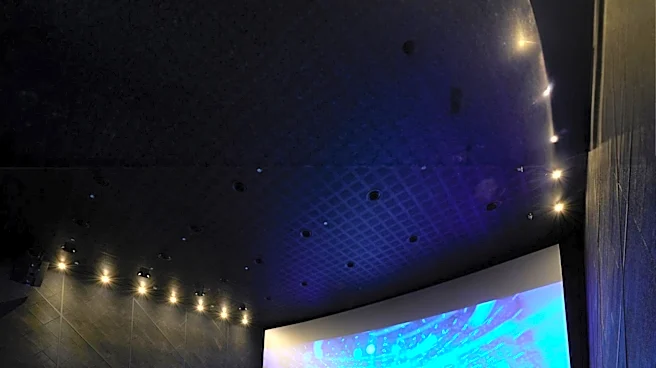
Nolan's "The Odyssey," a DIY video team embarked on an experiment to determine if a small, independent crew could produce content worthy of an IMAX screen. The team created a two-minute narrative short centered on a Greek hoplite, designing it to leverage IMAX's unique towering presentation format and immense vertical scale. For this project, they utilized Fujifilm's GFX ETERNA 55, a certified digital camera under IMAX's 'Filmed For IMAX' program, provided by Lensrentals. The production spanned various locations, including the Nashville Parthenon and the Appalachian Mountains. The experiment culminated in a private screening at IMAX headquarters and a final test presentation at Chattanooga's Tennessee Aquarium IMAX, a six-story screen. 7 Wonders documented the entire process in a 10-minute YouTube documentary.
Why It's Important?
This independent exploration by 7 Wonders holds significant importance for the film industry, particularly for aspiring filmmakers and the democratization of high-end production. By questioning the traditional exclusivity of IMAX filmmaking to Hollywood-scale productions, the project highlights the potential for smaller teams to access and utilize advanced cinematic technologies. This could inspire a new wave of independent content creators to experiment with large-format storytelling, potentially diversifying the types of films seen on IMAX screens. The use of a certified digital camera like Fujifilm's GFX ETERNA 55 demonstrates that professional-grade equipment is becoming more attainable, lowering the barrier to entry for high-quality productions. This initiative could also influence IMAX Corporation to further expand its 'Filmed For IMAX' program, making more cameras and resources available to a broader range of filmmakers. Ultimately, it challenges the perception that only major studios can produce visually stunning, immersive cinematic experiences, fostering innovation and creative freedom within the independent film community.
What's Next?
The release of "Can Anyone Film an IMAX Movie?" and its accompanying documentary is likely to spark further discussion and experimentation within the independent filmmaking community regarding large-format production. The project's success in securing a screening at IMAX headquarters could encourage other independent creators to pursue similar ambitious projects, potentially leading to more diverse content being considered for premium screens. IMAX Corporation might observe the interest generated by this initiative and consider expanding its outreach or support for independent filmmakers, possibly through workshops, grants, or increased access to certified equipment. This could foster a more inclusive environment for large-format filmmaking. Additionally, the documentary itself could serve as a valuable resource, demystifying the technical and logistical challenges of IMAX production for those outside major studios. The ongoing dialogue will likely focus on balancing the creative aspirations of independent artists with the technical demands and financial realities of producing for such a specialized format.
Beyond the Headlines
Beyond the immediate implications for independent filmmaking, 7 Wonders' project touches upon broader themes of technological accessibility and creative empowerment in the digital age. The experiment challenges the notion that cutting-edge technology remains solely within the grasp of large corporations, demonstrating how ingenuity and resourcefulness can bridge the gap. This has ethical implications concerning intellectual property and the potential for independent voices to shape mainstream cultural narratives. The project also highlights the evolving relationship between technology providers (like Fujifilm and Lensrentals) and content creators, suggesting a future where partnerships facilitate greater creative freedom. Culturally, it reinforces the idea that artistic vision is not limited by budget size, but rather by imagination and determination. This could lead to a re-evaluation of traditional film production models, fostering a more collaborative and open ecosystem where innovation can emerge from unexpected corners, ultimately enriching the cinematic landscape with diverse perspectives and storytelling approaches.