







What's Happening?
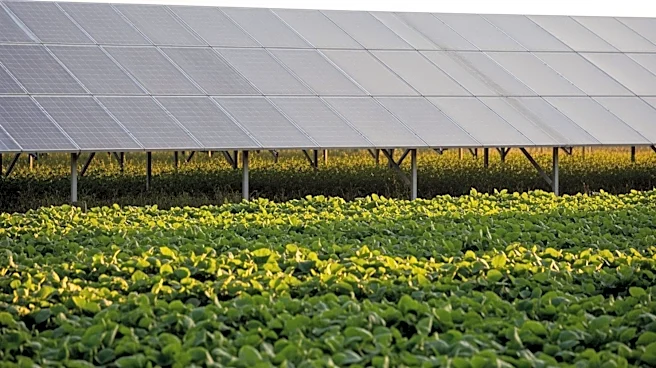
Agrivoltaics is an innovative approach that combines solar energy production with agricultural activities on the same land. This method allows for efficient land use, where solar panels provide shade to crops, protecting them from extreme weather and preventing
light saturation. In return, the crops help keep the solar panels cool, enhancing their efficiency. This symbiotic relationship not only supports sustainable agriculture but also contributes to renewable energy production. Agrivoltaics is gaining attention as a means to address the growing demand for food and energy while reducing greenhouse gas emissions associated with traditional agriculture.
Why It's Important?
Agrivoltaics represents a significant advancement in sustainable agriculture and energy production. By integrating solar panels with farming, it addresses the dual challenges of food security and renewable energy generation. This approach can help mitigate climate change by reducing reliance on fossil fuels and lowering the carbon footprint of agricultural practices. Additionally, agrivoltaics can enhance water conservation and increase farm productivity, offering economic benefits to farmers. As the global population continues to grow, such innovative solutions are crucial for meeting future food and energy needs sustainably.
Beyond the Headlines
While agrivoltaics offers numerous benefits, challenges such as high initial costs and the need for adaptation by farmworkers remain. Overcoming these obstacles requires investment in research and development, as well as policy support to encourage widespread adoption. The potential for agrivoltaics to transform agricultural practices and energy systems makes it a promising area for future exploration and innovation.